Weekly Update for the week ending April 12, 2024

This past week was pivotal for investors. The latest US inflation numbers, measured by the Consumer Price Index (CPI), could swing the door open for a possible US interest rate cut in June – if it indicated that inflation was on the decline. Conversely, flat, or rising inflation rates could extinguish any hopes for a rate reduction in June.

In this week’s edition of our series for new investors, I will cover a few of the risks beginners should be aware of when they start investing. Alongside the latest US inflation report and what it meant for investors, let’s see what else happened this past week….

Items that may only interest or educate me ….

Canadian Economic news, US Economic news, Types of direct investing risks, ….


Canadian Economic news

This past week’s key economic data that the Bank of Canada (BoC) considers when deciding whether to raise or lower the interest rate.

Bank of Canada meeting

As expected, the Bank of Canada (BoC) maintained Canada’s benchmark interest rate at 5%. This decision marks the sixth consecutive time the rate has been held steady since July 2023.

The Bank observed that the economy stalled in the latter half of 2024, but they are now forecasting growth of 1.5% this year and 2.2% next year, driven by higher consumer spending and increased immigration. The labour market continues to slow, with unemployment edging higher in March. Regarding inflation, the bank acknowledged signs of subsiding inflation since the start of the year, highlighted by the March CPI report which showed inflation had dropped to 2.8%. The Bank predicts inflation will hover around 3% during the second quarter, falling to 2.5% by the year’s end and returning to their 2% target in 2025. Given these factors, they decided to hold the interest rate at 5% and continue monitoring the downward inflation trend.

At their post-meeting press conference, BoC Governor Tiff Macklem said “Yes, June rate cut is within the realm of possibilities” if the recent cooling trend in inflation continues. BoC officials want to see more data to be confident that the downward trend in inflation will be sustained. The possibility of a future rate cut is positive news for borrowers, as it would lower interest rates on loans and mortgages. However, this is not guaranteed, and a lot can happen between now and the next central bank meeting. It will depend on future economic data and there are two more CPI reports before their June 5 meeting.

Overall, the BoC’s announcement suggests a wait-and-see approach to monetary policy. If inflation continues to slow, there is a chance Canadians could see interest rates start to drop. Keep your fingers crossed. 😊

Canadian market volatility

Over the past week, Canada’s Volatility Index (VIXC), which tracks the TSX 60 VIX, rose over 10% to 12.94, from the previous week’s 11.67. The BoC decision to maintain the interest rate at 5%, combined with the higher-than-expected US inflation report making it more likely that the Fed will delay the first US rate cuts is likely the cause of the increased volatility reading.

The VIXC, often referred to as Canada’s ‘fear gauge,’ provides insights into the expected volatility within the Canadian stock markets. Typically, readings above 20 signify high volatility, while those below 20 indicate low levels. The current reading of 12.94 places it well below the high volatility zone.

US Economic news

This past week’s key data points that the Federal Reserve (Fed) considers when deciding whether to raise or lower the interest rate.

Federal Open Market Committee (FOMC) meeting minutes

The minutes from the March 19-20, 2024, FOMC meeting were released this week. At that meeting, FOMC members kept the benchmark interest rate at 5.5%, marking the third consecutive hold. The minutes indicated that Fed officials considered a number of factors before making their decision.

US GDP grew solidly in the first quarter, though slower than the fourth quarter. The job market remained strong with job gains and slightly higher unemployment. Consumer price inflation in the form of Personal Consumption Expenditures (PCE) continued to decline but stayed above 2%. In contrast, foreign economies showed weak growth and high inflation due to higher energy prices.

US financial conditions eased slightly since January, with rising equity (stocks) prices outweighing interest rate hikes. This growth was primarily driven by large-cap tech stocks, while broader markets saw more measured gains.

The FOMC members acknowledged progress towards their 2% inflation target but noted higher-than-expected recent inflation readings. This suggests inflation’s decline might have stalled, potentially requiring higher rates for longer. They anticipated some unevenness in inflation data as it returns to target.

Overall, the FOMC agreed the economy continued to expand, the job market remained strong with low unemployment, and inflation, though down year-over-year, remained above target. They viewed the outlook as uncertain, emphasizing the need to monitor inflation risks.

Consumer Price Index (CPI)

The latest inflation figures from the March CPI showed inflation rose 0.4%, matching February’s pace of 0.4%. Shelter (mortgage and rent) and gas prices accounted for half of the monthly increase. Annually, the CPI increased 3.5%, accelerating from last month’s rate of 3.2%. Both numbers were higher than analysts’ expectations of a 0.3% and 3.4% rise, respectively. The all-items CPI, or headline CPI, has increased monthly since the December 2023 data shoed inflation grew at a rate of 0.2%.

The price of ‘Gasoline’ saw the largest monthly increase, up 1.7%, while the price of ‘Used cars and trucks’ saw the biggest decline, down 1.1%. Annually, ‘Transportation services’ saw the biggest increase, up 10.7%, while ‘Fuel oil’ posted the biggest decrease, down 3.7%

Core CPI, which excludes volatile energy and food prices, increased 0.4%, the same pace as the February increase. Year over year, core CPI growth remained steady at 3.8%, the same as the previous month. Both numbers were higher than analysts’ predictions of a 0.3% and a 3.7% increase, respectively. Core CPI has remained unchanged at 0.4% since January 2024.

Based on this latest report, the rate of inflation has remained constant monthly, however, on a yearly basis, inflation is up. The Fed has said they wanted to see evidence that inflation was falling before they considered lowering the interest rate. This higher-than-expected inflation report, combined with last week’s higher than expected labour report, all but ensures interest rates remain higher through the summer. That is neither good news for consumers nor businesses.

American market volatility

The CBOE Volatility Index (VIX), often referred to as the market’s fear gauge, rose 8% to end the week at 17.31, up from 16.03 the previous week. Although this uptick keeps the VIX below the 20-point threshold commonly associated with heightened volatility, it signals a rise in investor anxiety about potential market fluctuations in the near future. The rise of the VIX is likely driven by the higher-than-expected inflation report, which weakens the possibility of a June rate cut and likely lowers the number of cuts this year from three to two cuts. While investor anxiety remains relatively low, it is clear that there’s growing caution around market volatility.

Consumer Sentiment Index (CSI)

The University of Michigan’s preliminary Consumer Sentiment Index (CSI) registered at 77.9, falling short of analysts’ expectations of 79.0. This figure marks a 1.9% decrease from March’s 79.4 but also represents a significant 22.3% increase from the same period last year. Consumer sentiment continues to hover in a narrow range between 75 and 80, indicating that consumers perceive little change in the economic landscape over the course of this year.

The CSI is a monthly survey that measures consumer confidence in the US economy. A higher CSI indicates greater optimism among consumers.

What type of risks should I be aware of if I’m going to invest directly in companies?

When discussing investments with people considering investing or new to investing, a common concern is the fear of losing everything. While total loss is possible, it is relatively rare. For instance, I once lost an investment in a cryptocurrency company when the company went bankrupt. However, gains from other companies in my portfolio have more than compensated for this loss. So, while the risk of loss is real, there are effective strategies to mitigate it.

Understanding Stock Market Risks
Investing in the stock market inherently involves the risk of losing money. Several factors can lead to a decrease in a company’s share price, including poor management, failure to innovate, industry disruptions, accounting irregularities, or outright fraud. Not all declines happen overnight—many are gradual, barring exceptional circumstances like fraud. If you suspect a company is in decline, you can always sell your shares. Remember, a small loss now can prevent a larger one later. 😊

Effective Risk Mitigation Strategies

  • Diversification: Investing in a single company is risky, akin to putting all your eggs in one basket. By spreading your investments across at least 15 companies from varied sectors (e.g., technology, banking, consumables), you reduce the impact of any single company’s failure. This lowers risk significantly, as the successful investments can offset any faltering ones.
  • Long-Term Investing: Adopting a ‘Buy and Hold’ strategy—investing in larger, quality companies for the long term, typically over five years—minimizes risk by focusing on company performance rather than short-term share price fluctuations. Periodic portfolio reviews are essential to ensure your investments are on track to help you reach your goals. I consider a ‘quality’ company one that has strong financial health, stable revenue growth, robust profit margins, a clear competitive advantage, good corporate governance, and a proven track record of resilience and growth prospects. Additionally, such companies often offer consistent dividends.

Common Investment Pitfalls to Avoid

  • Liquidity Needs During Downturns: One of the biggest risks is the need to liquidate your investments during a market downturn (like in 2022). If you anticipate needing funds in the short term (1 – 2 years), consider safer, more liquid options like Guaranteed Investment Certificates or High Interest Savings accounts.
  • Emotional Responses: Decisions driven by short-term market movements can lead to premature selling, resulting in unnecessary fees and taxes. Invest in quality companies and concentrate on the long-term prospects of your investments.
  • Chasing Trends: Investments in trendy stocks or sectors, such as meme stocks, can be very volatile and often benefit seasoned players at the expense of less experienced investors.
  • FOMO: Avoid the allure of jumping into the latest popular stock. High transaction costs and taxes can erode gains. For instance, in 2020, the metaverse was a ‘hot’ investment. Many who chased this trend experienced significant losses when the market shifted focus. Try to ignore the hype and opt for well-established companies with promising long-term prospects.

Final Thoughts
Remember, selling shares triggers tax implications, so be mindful of capital gains taxes. Additionally, avoid using margin accounts for investment; while they offer more buying power, they also carry the risk of a margin call, potentially forcing you to sell other investments to cover the ‘loan’ from your brokerage.

Investing directly in companies carries various risks, but with careful planning, diversification, and a long-term perspective, you can successfully navigate these challenges. Don’t be afraid to consult with a financial advisor or a tax consultant.


Weekly Market Review

Monday: the markets were up and down like a yoyo today as investors come to grips with the likelihood that strong economic data will likely delay interest rate cuts by the Fed. At the end of the trading session, the Toronto Stock Exchange Composite Index (TSX), the S&P 500 Index (S&P), and the Dow Jones Industrial Average (DJIA) all ended slightly below the baseline, while the Nasdaq Composite Index (Nasdaq) ended slightly higher. Oil prices dropped slightly as tensions eased in the Middle East after Israeli troops reduced their presence in southern Gaza.

In Canada, the markets were relatively quiet as analysts and investors await the BoC interest rate decision on Wednesday. Investors will be looking for clues as to when the BoC could make its first interest rate cut. In trading, Industrials and Utilities advanced the most of the Canadian sectors, while Consumer Cyclicals and Healthcare lost the most.

In the US, investors await this week’s latest news on inflation to see if it has resumed its downward trend. Anything but a drop in CPI could delay cuts to the interest rate. In trading, Basic Materials (miners and fertilizer manufacturers) posted the biggest gains, while Energy and Healthcare declined the most.

Tuesday: another mixed day in the markets with the DJIA down slightly but essentially unchanged, while the other three indexes were each slightly higher.

In Canada, the TSX was in the green most of the day on the way to setting a record high closing because of higher gold and commodity prices. Tomorrow, the BoC will announce its latest decision on the benchmark interest rate. In trading, it was a day of broad-based advances, led by Basic Materials and Telecommunications Services. Healthcare was the only sector to decline.

In the USA, Investors were cautious as they waited for tomorrow’s latest US inflation numbers and the release of the minutes from the Fed’s March meeting. Analysts and investors alike will scrutinize the minutes and inflation data, looking for clues as to when rates might start to fall. In trading, Basic Materials and Consumer Cyclicals posted the biggest gains, while Telecommunications Services had the biggest losses.

Wednesday: it was a pivotal day for the markets, unfortunately it pivoted the wrong way. ☹ The US inflation data for March showed inflation was higher than expected, causing many investors to feel the Fed will not only delay a rate cut, but also reduce the number of rate cuts. The indexes ended sharply lower following the disappointing news. Oil prices rebounded following two days of declines after Middle East peace talks stalled.

In Canada, the BoC left the Canadian interest rate unchanged at 5%, however, it indicated a June reduction was possible if inflation continued to fall. With the Canadian interest rate staying at 5% and the inflation news out of the US, the TSX recorded its biggest decline in two months. In trading, the Energy and Basic Materials sectors were the only sectors to end in the green. Technology and Financials posted the biggest losses.

In the USA, the only positive news of the day was the minutes from the Fed’s last meeting revealed many of them felt a rate cut would be appropriate at some point in 2024. In trading, it was a day of broad-based losses that saw only the Energy sector able to end in positive territory. Financials and Utilities suffered the largest losses.

Thursday: after yesterday’s market plunge, the markets rebounded with the S&P and Nasdaq ending higher, the DJIA was flat while the TSX lost ground for the second consecutive day. Investors are now recalibrating their expectations for when the Fed will start lowering the US interest rate. Oil prices were slightly higher on concerns the Middle East conflict could spread further in the region, offsetting yesterday’s high inflation data.

In Canada, lower oil prices prevented the TSX from joining its American siblings in the win column. In trading on Bay Street, Basic Materials and Technology were the biggest winners of the Canadian sectors, Energy and Industrials suffered the biggest setbacks.

In the US, a bit of good inflation news in the form of lower-than-expected producer prices suggested inflation continues to fall despite yesterday’s high inflation data. The good news led to a rally in the big technology companies that sent the Nasdaq to a record high. In trading on Wall Street, Technology and Consumer Cyclicals led the charge upward, while Financials and Consumer Cyclicals recorded the biggest retreat.

Friday: earnings season got off to an auspicious start with all four indexes ending deeper in the red. Oil prices moved higher after Israel rejected a Hamas proposed ceasefire, renewing Middle East supply disruption concerns.

In Canada, despite higher energy prices, the TSX had its biggest one day drop in almost two months because of lower commodity prices and concerns of sticky US inflation. In trading, it was a day of losses across the board. Industrials and Utilities fell the least while the Healthcare and Technology sectors recorded the biggest losses.

In the US, the big US banks got earnings season off to a rocky start with unimpressive results. The lack of strong results left investors’ focus on sticky inflation, weighing down the markets. As a result, the DJIA had its steepest weekly since March 2023. In trading, all sectors ended lower. The Utilities and Consumer Staples sectors fell the least while Technology and Consumer Cyclicals dropped the most.


Weekly Market and Portfolio Review

For the week, the TSX (SPTSX) fell 1.6%, the S&P 500 (SPX) dropped 1.6%, the DJIA (INDU) plunged 2.4% and the Nasdaq (CCMP) slipped 0.5%.

 
Index Weekly Streak
TSX: 1 – week losing streak
S&P: 2 – week losing streak
DJIA: 2 – week losing streak
Nasdaq: 3 – week losing streak

Bearish market As illustrated in the chart above, it was a challenging week for the indexes. All four major North American indexes recorded weekly losses, despite a rally on Thursday that briefly pushed the Nasdaq into positive territory.

The primary driver behind market fluctuations this week was an unexpectedly high US inflation report. Both headline CPI (which includes all items) and core CPI (which excludes volatile food and energy prices) matched or exceeded estimates on both a monthly and annual bases. Coupled with previous reports showing a robust US economic growth and a strong labour market, this persistent inflation continues to concern investors about about the timing of the Fed’s potential rate cuts. Initially, the Fed had signaled three rate cuts in 2024, with investor expectations of reductions beginning as early as March. However, there has yet to be a rate cut, and following this latest inflation report, investors are reevaluating the timing and extent of these cuts, with current expectations leaning towards one or two cuts of 0.25% each in the second half of this year, signifcantly later and less than the 1.50% total anticipated at the start of the year.

In contrast, the BoC offered a more promising outlook, suggesting a possible rate cut in June should inflation continue to decrease. Despite this positive news, the TSX was also weighed down by a weekly decline in oil prices, though prices remain high enough to keep upward pressure on gasoline prices.

While Canada might see rate reductions as early as June, the scenario in the US appears more inclined towards maintaining “higher for longer” rates.

Portfolio Weekly Streak
Portfolio 1: 1 – week winning streak
Portfolio 2: 2 – week losing streak
Portfolio 3: 4 – week losing streak

Bearish market With all four indexes losing ground this past week, it was somewhat surprising to find that Portfolio 1 managed to increase in value. Unfortunately, its gains were not sufficient to offset the losses experienced by the other two portfolios.

Portfolio 1 had a busy week with investments in two new companies and the divestment of two others. A review of the holdings revealed a roughly equal split between stocks that increased and those that decreased in value. Many of the technology stocks rose in value, however, gains were seen in other sectors. While no company posted a significant (more than 10%) gain, Rivian Automotive (NASD: RIVN) recorded a sizable loss of 11%.

Portfolio 2 faced a challenging week with over 80% of its holdings declining in value slightly. The most significant drop was seen in Brookfield Infrastructure (TSE: BIPC), which fell by 10%.

Portfolio 3 recorded the weakest performance, with very few stocks advancing. The widespread downturn was so pronounced that stocks which remained flat were considered to have had a good week. ☹

April has started on a challenging note. Despite this, the rebound in Portfolio 1 provides a glimmer of hope. Looking ahead, I am hoping for a week of strong earnings reports to reverse the market’s current downtrend – caused by recent, stronger-than-expected US labour and inflation reports – and see all three portfolios post a weekly win.
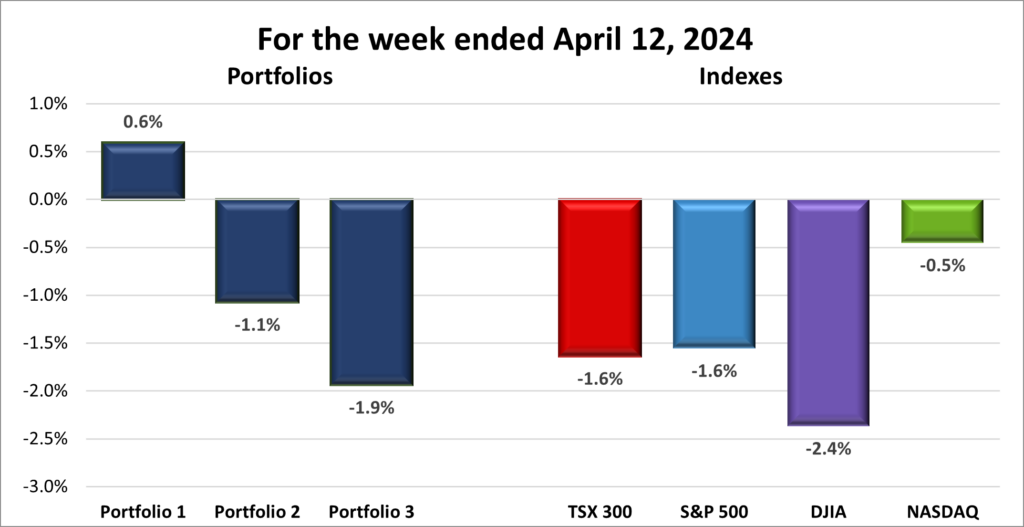
Weekly Portfolio & Index performance
Weekly Portfolio & Index performance for the week ended April 12, 2024.

Companies on the Radar

Stocks on my Radar This week brought several changes to my Radar list. Celestica Inc. (TSE: CLS) moved from the list to join Portfolio 1, reflecting its strong past performance and promising future prospects. Similarly, Carnival Cruise Line (NYSE: CCL) advanced to Portfolio 1, buoyed by its potential for nearly 50% growth.

Meanwhile, Arista Networks (NYSE: ANET) came onto my radar. Arista is a large American company specializing in networking products for global enterprises and has shown substantial growth over recent years, with its share price climbing in response to its robust performance. Though Arista has lingered on the outskirts of my radar for some time, it had not fully captured my attention until now. Looking back at the company’s achievements over the last few years, it is clear it deserved a closer examination earlier.

Arista joins the three remaining companies from last week:

  • Equitable Bank (TSE: EQB), a mid sized Canadian bank, considered Canada’s 7th bank, that provides financial services to consumers and businesses.
  • Lumine Group (TSE: LMN), a young, mid sized Canadian company that acquires communications and media software companies and then strengthens and grows those companies.
  • Evolution AB (OTCM: EVVTY), a Swedish company that provides live casino solutions for global gaming operators.

Please keep in mind that these are only companies that have piqued my interest. This is not a recommendation or financial advice. You should do your own research or contact a professional before making any investment decisions.

The Radar Check was last updated April 12, 2024.

Stock on the Radar List. 1 of 2.

Stock on the Radar List. 2 of 2.

NOTE: Morningstar and Thomson-Reuters analysis is unavailable for Evolution from my usual sources because the company’s home stock exchange is the Nasdaq Stockholm in Sweden. While it is possible to invest in Evolution through the Over-the-Counter Market, I do not have access to analysis similar to the data available for companies traded on the major North American stock exchanges (Toronto Stock Exchange, New York Stock Exchange, and Nasdaq Stock market). The Analysts Rating and Price Target for Evolution are from Yahoo! Finance, under the Analysis tab once you have searched for the ticker.


Portfolio Update

Portfolio 1

Portfolio 1 for the week ended April 12, 2024: UP Green Up Arrow, signifying a positive week

  • Nvidia (NASD: NVDA) is being sued for trademark infringement by Modulus Financial Engineering. The company complains Nvidia’s new artificial intelligence (AI) software Modulus creates confusion with their own AI related software. Since I have never heard of Modulus Financial, I can see how anyone not familiar with the company would think of Nvidia rather than their product.
  • Alphabet’s (NASD: GOOGL) announced two new semiconductors. The first is their own Tensor processing units (TPU), used in their datacentres for their AI services. This chip is not for resale and is only available for use through Google’s Cloud services. The other chip is an Arm (NASD: ARM) based central processing unit. This chip, called Axion, is also only available via the Google Cloud. Customers can build and run their application in Google’s cloud on Axion chips or build AI applications and run them on TPUs on the Google cloud.
    In other Google news, Epic Games has asked a US federal court to force Google to allow third party app stores on Google’s Android mobile operating system. This decision could go either way. If Google were to lose this challenge it could be a hit to their Google Play Store revenue stream.
  • General Motors (NYSE: GM) said they will resume their Cruise robo taxi services In Phoenix, AZ after suspending the service in San Francisco, CA about six months ago. However, the vehicles will be manually driven rather than fully autonomous as was the case in San Francisco.
  • Apple (NASD: AAPL) announced plans to update all their Mac computers with their new M4 processors, complete with AI capabilities. The new computers should be available towards the end of 2024.
    Elsewhere, Apple lost its attempt to have the British Competition Appeal Tribunal (CAT) dismiss a lawsuit that claims it charged over 1,500 British base developers unfair commission fees. The lawsuit is for almost US$ 1 billion.
  • Amazon (NASD: AMZN) loaded up its AI credentials with the addition of computer scientist Andrew Ng who previously headed up AI projects at Google. Amazon is in a race for market shares with other big AI companies such as Google and the Microsoft/OpenAI combination.

Activity

Bought: Celestica Inc. Celestica is a Canadian multinational in the electronics manufacturing services (EMS) industry, offering comprehensive hardware platform, lifecycle support, and supply chain solutions on a global scale. As a pivotal partner for notable companies like Cisco (NASD: CSCO) and Dell (NYSE: DELL), Celestica plays a critical role in the design, manufacture, and delivery of electronic products. The company’s involvement across diverse markets – ranging from communications and enterprise computing to aerospace, defense, and more – affords a natural hedge against sector-specific downturns, thereby reducing investment risk.

Over the years, Celestica has demonstrated solid growth in revenue, net income, and free cash flow. The company has a robust balance sheet, and they are focused on profitability and capital efficiency. While historical success does not guarantee future outcomes, the increasing demand for advanced technology and the prevailing outsourcing trends present favorable growth opportunities for Celestica.

Potential challenges for Celestica include the impact of sustained high interest rates, which could slow the technology sector’s growth. Furthermore, Celestica’s extensive global operations expose it to a range of political, economic, and supply chain risks. However, the company has successfully navigated these headwinds in the past so they should be able to navigate future headwinds.

A mid-sized ($2 billion – $10 billion) powerhouse, Celestica offers stability and growth potential in the expanding electronics manufacturing market. While it increases the portfolio’s technology focus, Celestica adds a stable and established company with significant growth potential in an expanding market. 😊

Bought: Carnival Corporation Carnival is more than one cruise line, it also owns well known cruise lines Princess Cruises (of Love boat fame), and Holland America Line as well as a number of smaller, regional cruise companies that sail in various parts of the world. As well as cruise ships, the company also operates port destinations and their own private islands that their ships stop at. This provides other sources of revenues for the company

I have never been on a cruise and have no desire to go on a cruise in the future. However, a growing number of others do. The global cruise industry continues to recover from the Covid-19 pandemic and is expected to grow in the coming years, driven by factors like increasing disposable income, pent-up demand after the pandemic, and growing popularity of cruises in Asia.

The pandemic hit Carnival and its share price hard. Many analysts believe the company is undervalued with plenty of upside potential, as much as 50% in the next year. As for the financials, revenues, Free Cash Flow (FCF) and net income are all trending upward. Excess capital from FCF has been used to pay down debt, ahead of schedule, that had jumped during pandemic when cruises were not running.

Risks involved in this investment are many. Cruises are considered a discretionary expense. Higher interest rates or an economic downturn could dampen travel, hurting Carnival’s business. Not only would higher interest rates impact travellers, but servicing this debt could limit their ability to invest in new ships or marketing initiatives. Other concerns include major competitors in the industry and growing concerns about the environmental impact of the cruise industry.

I do not plan to hold this stock for a long time, perhaps up to three years, however, the industry and company appear to be on the upswing. After weighing the pros and cons of an investment in Carnival, I felt the risk was worth the reward. Hopefully, this cruise will enjoy fair winds and a following sea as the investment cruises to higher returns. 😊

Sold: Nuvei Corporation (TSE: NVEI) The company has agreed to be taken private by Advent International. The deal has the support of the majority owners so it is very unlikely the share price will go higher than the original offer of US$ 34.00 per share.

This investment did not turn out as planned. I should have sold my initial investment in late 2021 when the share price was near its all time peak. Instead, I purchased additional shares, only to see the bottom fall out during 2022. The share price has been slowly increasing, but not enough to avoid a loss on this investment.

It is frustrating to miss a peak and see the price fall. However, I decided to take advantage of this buyout and move on to other opportunities, like investing in Celestica. 😊

Sold: Nvidia Corp As I noted in the March 29 Weekly Update [link to March 29], Nvidia had grown to over 40% of the total portfolio value, making it overly sensitive to the share price fluctuations of a single stock. I trimmed the number of NVidia shares because I typically aim to keep individual holdings below 35% of the portfolio. The proceeds will be reallocated to other top performers.

Dividends

Dividends Received this week for the following companies:

Companies followed by DRIP (Dividend Re-Investment Plan) indicate additional shares were purchased with the dividend. Any cash leftover was added to the cash balance.

No dividends this past week.

Quarterly Reports

No quarterly reports this past week.

Portfolio 2

Portfolio 2 for the week ended April 12, 2024: DOWN Red Down Arrow

  • MongoDB (NASD: MDB) announced expanded integration with Google’s Google Cloud services. This will enable Google Cloud customers to create AI applications using their own MongoDB hosted data.

Activity

No significant activity to report this week.

Dividends

Dividends Received this week for the following companies:

Companies followed by DRIP (Dividend Re-Investment Plan) indicate additional shares were purchased with the dividend. Any cash leftover was added to the cash balance.

Canadian $

Telus Corp (TSX: T)

US $

No US$ dividends this past week.

Quarterly Reports

No quarterly reports this past week.

Portfolio 3

Portfolio 3 for the week ended April 12, 2024: DOWN Red Down Arrow

  • Microsoft (NASD: MSFT) announced they planned to invest US$ 2.9 billion over the next two years to expand their datacentre infrastructure and AI capabilities in Japan.
    In other Microsoft news, the US Cybersecurity and Infrastructure Security Agency said Russian hackers are using credentials stolen from hacked Microsoft email accounts to try and gain access to Microsoft’s customer systems, including government agencies.
  • Brookfield Asset Management (TSX: BAM) is negotiating to purchase a majority position in private company Castlelake, an alternative investment company.

Activity

No significant activity to report this week.

Dividends

Dividends Received this week for the following companies:

Companies followed by DRIP (Dividend Re-Investment Plan) indicate additional shares were purchased with the dividend. Any cash leftover was added to the cash balance.

Canadian $

TD U.S. Equity Index ETF (TSX: TPU)

Brookfield Asset Management Ltd. (TSX: BAM)

Brookfield Corp (TSX: BN)

US $

No US$ dividends this past week.

Quarterly Reports

No quarterly reports this past week.


Weekly Update for the week ending April 5, 2024

Navigating the world of investing often mirrors the emotional rollercoaster experienced by hockey fans as the season nears its end and the draft lottery looms. The dilemma? To wholeheartedly support your team’s victories or, paradoxically, hope for losses if it secures a superior draft spot. This dichotomy is strikingly similar in the realm of investments, where economic news can simultaneously herald positive developments and trigger investor apprehension. Take, for example, the recent labour report from the US: It showed job growth and wage increases surpassing expectations—a testament to a thriving economy and a win for the workforce. Yet, for those keen on seeing interest rates decline, this was a setback. Rising wages, after all, can exacerbate inflationary pressures. The statement by a Federal Reserve official that it is “much too soon to think about cutting interest rates” effectively quashed any hopes for an imminent rate cut, epitomizing the scenario where robust economic health can dampen prospects for those favoring lower interest rates. ☹

This week we will look at recent labour data from Canada and the US that led to this dilemma, as well as some things you should consider if you are considering investing for the first time or have just started. Now, let’s see what happened this past week….

Items that may only interest or educate me ….

Canadian Economic news, US Economic news, What should I consider before investing? ….


Canadian Economic news

This past week’s key economic data that the Bank of Canada (BoC) considers when deciding whether to raise or lower the interest rate.

Labour Force Survey (LFS)

Statistics Canada’s LFS for March revealed a unexpected decline in employment, with the economy shedding 2,200 jobs following gains in both January and February. Year-over-year, employment has increased by 1.6%. Analysts had expected a gain of 25,000 jobs.

The unemployment rate saw a rise of 0.3%, climbing from February’s 5.8% to 6.1% in March. This marks the highest unemployment rate observed in over two years, surpassing analysts’ expectations of a 5.9% rate. Compared to the previous year, unemployment has increased by 1.0%.

Interestingly, the rate of hourly wage growth saw an acceleration to 5.0% year-over-year, a slight increase from February’s 4.9%. This upturn, the first in three months, might be welcomed by employees but complicates the ongoing battle against inflation.

While the BoC may view the faster wage growth with caution due to its potential to fuel inflation, the overall easing of the labour market could pave the way for a reduction in the benchmark interest rate come June.

Canadian market volatility

Over the past week, Canada’s Volatility Index (VIXC), which tracks the TSX 60 VIX, rose to 11.67, up over 8% from 10.72 the previous week. The slowing Canadian labour market, combined with a higher-than-expected US labour report that could delay the first US rate cuts are likely the primary reasons for the low volatility figure.

The VIXC, often referred to as Canada’s ‘fear gauge,’ provides insights into the expected volatility within the Canadian stock markets. Typically, readings above 20 signify high volatility, while those below 20 indicate low levels. The current reading of 11.67 places it well below the high volatility zone.

Trade Surplus

Canada’s trade surplus widened significantly in February, surpassing analysts’ expectations by turning a C$595 million deficit into a C$367 million surplus. The growth in exports was primarily fueled by record gold shipments. The larger-than-expected surplus suggests a robust economy, underscored by strong international demand for Canadian products and resources, especially gold and crude oil.

US Economic news

This past week’s key data points that the Federal Reserve (Fed) considers when deciding whether to raise or lower the interest rate.

Labour reports

Three recent labour market reports provide a snapshot of the current state of the American economy. Analyzing the latest data from the Job Openings and Labor Turnover Survey (JOLTS), ADP National Employment Report, and the Employment Situation Summary (ESS) provides a comprehensive view of the US labour market and reveals key trends in employment, and wage growth that can influence future economic policy.

Labor Department’s Job Openings and Labor Turnover Survey

The Labor Department’s Bureau of Labor Statistics’ JOLTS report for February showed job openings remained steady at 8.756 million from January’s revised 8.748 million openings. The number of openings was marginally higher than analysts’ expectations of 8.740 million openings. On a monthly basis, the change was negligible, while year over year, the number of openings shrunk 11% from 9.849 million. The report showed there was 1.36 job vacancies for each unemployed individual, down from January’s 1.43.

Despite slowly declining from the 11.2 million average number of job openings in 2022 when the economy was rebounding, the number of openings has been fairly consistent over the last few months. Overall, the JOLTS report paints a picture of a strong labour market with continued demand for workers, although the pace of growth is moderating.

ADP Employment Report

The ADP Employment Report for March revealed that private payrolls had their biggest increase since last July, adding 184,000 jobs. That was 18.7% higher than the revised 155,000 jobs added in February and higher than analysts’ expectations of an additional 148,000 jobs.

Pay increases for those changing jobs was up 10%, on a year-over-year basis, compared to 5.1% for those who remained in their positions. That is the highest rate of wage growth for job changers since July 2023. For those hoping for a sooner rather than later interest rate cut that is not good news because higher wages could increase demand for goods and services, sending prices higher and keeping inflation around longer.

Bureau of Labor Statistics’ Employment Situation Summary (ESS)

The Labor Department’s March ESS reported a robust job market, with nonfarm payrolls surging by 303,000 in March. This surge significantly exceeded expectations of 200,000 new jobs and easily surpassed February’s growth of 275,000 jobs. The strong gains outpace the twelve-month average monthly gain of 231,000 jobs.

Unemployment edged down to 3.8%, lower than analysts’ expectations that it would hold steady at 3.9%. Since last August, the unemployment rate has fluctuated narrowly between 3.7% and 3.9%.

Wage growth also picked up, with average hourly earnings rising by 0.3% in March following a slight 0.1% increase in February. On a year-over-year basis, wages climbed by 4.1%, Both the monthly and yearly numbers were in line with analysts’ forecasts.

The March ESS suggests a resilient economy, underscored by healthy job creation and steady wage growth. However, these positive trends might pose challenges for the Fed, potentially postponing the much-anticipated interest rate cuts due to concerns over inflation.

Conclusion

The US job market displayed its resilience in March, as highlighted by the three labour reports. This trio of reports underscores a robust economy and labour market, suggesting that the US is well-positioned to sidestep a recession while steering inflation toward the Fed’s 2% target.

The sustained strength in the labour market, as evidenced by these reports, is particularly encouraging for the Fed. It bolsters their strategy to maintain a strong labour market as part of their broader efforts to lower inflation to their 2% goal. However, the robust job market also provides the Fed with the leeway to keep interest rates elevated, adopting a cautious stance against reducing rates prematurely.

In essence, the March job market reports strike a positive note for both economic resilience and the Fed’s inflationary objectives, balancing strong employment with the gradual approach needed for lowering the interest rate. Although it will not make those hoping for a June rate cut very happy. 😊

American market volatility

The CBOE Volatility Index (VIX), often referred to as the market’s fear gauge, surged 23% this week, closing at 16.03, up from 13.03 the previous week. Although this uptick keeps the VIX below the 20-point threshold commonly associated with heightened volatility, it signals a rise in investor caution towards potential market fluctuations in the near future. The rise of the VIX is likely driven by the unexpectedly strong job growth reported in the latest ESS, which in turn could delay the anticipated rate cut and lower the number of cuts from three down to two cuts this year. While investor anxiety is not high, it is clear that there’s growing caution around market volatility.

What should I consider before investing?

Starting on your stock market investment journey can be thrilling yet overwhelming. While the journey can be complex, understanding the basics can unlock significant opportunities for growth and financial security. To navigate this path with confidence, it is essential to start with a solid foundation that includes understanding your financial situation, investment goals, risk tolerance, and investment timeline. Here is a streamlined guide to help you get started:

Step 1: Self-Assessment and Financial Housekeeping

Purpose of Investing: Clearly define your investing goals. Whether saving for retirement, a dream home, a new car, or your children’s education, your objectives will direct your investment strategy. For example, saving for retirement might mean aiming for a diverse portfolio that grows over time, while saving for a near-term goal, like a dream vacation, could focus on safer, more liquid investments.

Financial Health Check: Take a close look at your finances by creating a net worth statement and tracking your spending. This step is crucial for identifying potential savings opportunities and setting a realistic investment budget.

Eliminate High-Interest Debt: Prioritize paying off debts, especially those with high interest rates. High-interest debt can hinder your investment progress. Prioritize its repayment to free up more money for investing and reduce financial stress.

Income Stability: Consistent investment contributions are ideal. However, if your income fluctuates, planning for irregular contributions is essential.

Step 2: Preparing for the Unexpected

Emergency Fund: Before diving into investments, ensure you have a safety net. Establish an emergency fund — typically six months’ worth of living expenses — to cover unexpected life events, such as job loss, medical emergencies, or urgent home repairs. This fund is crucial for financial security, allowing you to handle unexpected events without derailing your investment plans.

Step 3: Building Your Investment Foundation

Risk and Time Horizon: Understanding your risk tolerance and investment timeline is pivotal. A longer horizon can generally accommodate more risk, allowing you to potentially benefit from the higher returns often associated with stock investments.

Educate and Research: Familiarize yourself with stock market fundamentals and conduct research on potential investments. Learning about diversification, for example, will show you how spreading your investments across various sectors, asset classes, and geographical areas can help manage risk. There are plenty of good investing resources available such as financial news websites, investment sites, investment news and stock recommendation subscriptions, or go old school read books on investing. 😊

Professional Advice: Consider consulting with a financial advisor for tailored advice. They can guide you on using tax-advantaged accounts and ensuring your investments complement your broader financial goals, including estate planning. They can ensure your investment strategy aligns with your overall financial plan.

Step 4: Diving into Investments

Choosing Investments: Begin with stable companies known for regular dividends, where a company pays out a portion of its profits to shareholders on a regular basis. Essentially, this is a reward for investing in the company. A good place to start is with a ‘dividend aristocrats’. These companies have a proven track record of increasing their dividends for at least 25 consecutive years, offering both growth potential and income. On a personal note, psychologically, it feels good to see money coming into your account no matter what the markets are doing. 😊

Diversification: Mitigate risk by diversifying your portfolio over time. This strategy involves investing in a mix of sectors, asset types, and even geographical regions to safeguard against volatility.

Understanding Costs: Keep an eye on fees, including brokerage and management fees, as they can eat into your returns.

Long-term Perspective: Avoid the temptation to time the market. Adopting a disciplined, long-term approach, and considering strategies like dollar-cost averaging, can be more beneficial than chasing short-term gains.

Step 5: Emotional Discipline and Adhering to Your Plan

Emotional Discipline: The market’s unpredictability requires a steady hand. Be prepared for volatility and resist making hasty decisions based on short-term movements. Recognizing common emotional traps, such as the fear of missing out or panic selling, can help you maintain focus on your long-term objectives.

Regular check ins: set up regular check-in intervals on investment performance (e.g., quarterly, or semi-annually) to avoid the common pitfall of over-monitoring, which can lead to emotional decision-making.

Sticking to Your Plan: Stay committed to your strategy through market ups and downs. While periodic adjustments based on changing circumstances or financial goals are reasonable, they should be thoughtful and not reactive.

Conclusion

While every investment journey comes with its own challenges, arming yourself with knowledge and a clear strategy is the first step towards building a prosperous financial future. Remember, successful investing is not just about selecting the right stocks, but also about aligning your investments with your financial goals and personal risk tolerance. Everyone’s goals and investing path is unique so do what is right for you.

Keep in mind that investing involves risks, including the potential loss of principal. This guide is not financial advice; it is meant to help you get started on your investment journey. As you gain experience and your financial situation evolves, consider adapting your strategy to better suit your changing needs and objectives.


Weekly Market Review

Monday: the first day of trading in the second quarter ended with mixed results as the Toronto Stock Exchange Composite Index (TSX) and the Nasdaq Composite Index (Nasdaq) ended barely higher while the S&P 500 Index (S&P) and the Dow Jones Industrial Average (DJIA) each ended lower. Oil prices continued to rise, spurred on by supply issues caused by the Middle East situation and the potential strong demand from the world’s two largest economies, the USA and China.

In Canada, rising commodity prices helped propel the TSX to a record high close. In trading, Basic Materials (miners and fertilizer companies) and Energy were the top performers of the Canadian sectors, while Utilities and Financials dropped the most.

In the US, the S&P and DJIA were weighed down by higher-than-expected manufacturing data. Investors worried it could cause a delay to a hoped-for interest rate cut in June. In trading, Energy, Technology, and Basic Materials were the only American sectors to end in positive territory. Among the sectors to end lower, Financials and Healthcare incurred the biggest decline.

Tuesday: a tough day in the markets as all four indexes were down sharply. Concerns interest rates will remain high through the summer weighed heavily on the markets today. Oil prices rose on supply concerns after Ukraine drone attacks on Russian refineries and escalating hostilities in the Middel East.

In Canada, recent BoC inflation expectations were still too high causing investors to be concerned the BoC could delay rate cuts until July. Also weighing on the TSX was the timing of interest rate cuts by the Fed. In trading, Basic Materials and Energy were the only sectors to end the day in the green, while Telecommunications Services and Industrials fell the farthest.

In the USA, February labour data came in higher than predicted causing investors to worry the Fed may delay or end up lowering rates twice rather than three times in 2024. In trading, Energy and Utilities were the only sectors to end in positive territory. Healthcare and Industrials dropped the most of the remaining sectors.

Wednesday: The markets got off to a good start after Fed Chair Jerome Powell in a speech today echoed his previous comments when he said the Fed was likely to lower the interest rate this year, despite the “bumpy” road to their 2% inflation target. However, he also signalled that a rate cut was still not in sight, causing the markets to fade in afternoon trading, with the DJIA giving back morning gains and falling into the red.

In Canada, the three heavyweight sectors in the TSX (Basic Materials, Energy and Financials make up over 60% of the index) had a good day, propelling the TSX into positive territory. Commodity and energy prices continued to rise. However, in trading, Healthcare was the top performing sector, followed by Basic Materials. Of the sectors that ended lower, Technology and Consumer Cyclicals suffered the biggest drops.

In the US, the March economic data has many analysts and investors questioning a June rate cut with many now suggesting July as the start of rate cuts. Basic Materials and Energy led all sectors, while Consumer Staples and Utilities were the only sectors to end lower.

Thursday: All four indexes fell as sellers ruled the day after a Fed official suggested it was possible that there would be no rate cuts this year if inflation remained sticky. One factor in inflation remaining sticky is rising oil prices. Worsening conditions in the Middle East has led to supply concerns resulting in rising oil prices.

In Canada, the TSX ended in the red because of a decline in commodity prices. In trading, Consumer Cyclicals, Telecommunications Services, and Energy were the only sectors to end higher, with Consumer Staples and Healthcare losing the most.

In the US, the idea that the highly anticipated rates cuts could be pushed back sent all three indexes sharply downward into the red, with drops of at least 1% each. Investors will be paying close attention to tomorrow’s latest jobs report. In trading, all American sectors ended lower. Energy and Consumer Staples dropped the least, while Technology and Basic Materials fell the most.

Friday: all four indexes rebounded from yesterday’s losses to end the day solidly in positive territory. Oil prices continued to rise on concerns heightened tensions in the Middle East could limit supply. As a result of the steadily rising prices, oil posted its second straight weekly gain.

In Canada, the TSX set another record high on rising commodity prices. As well, the monthly labour report showed the number of jobs decreased and unemployment rose, boosting investors hopes for the BoC to lower the interest rate at their June meeting. It was a good day for trading as all sectors ended higher, led by Basic Materials and Healthcare. The lone exception was Utilities.

In the US, the three American indexes all ended higher despite a surprisingly higher jobs report indicated the American economy remained strong despite the high interest rates. The strong job market could push back the lowering of interest rates. In trading, it was a day of broad-based advances, led by Technology and Industrials. Telecommunications Services was the only sector not to advance.


Weekly Market and Portfolio Review

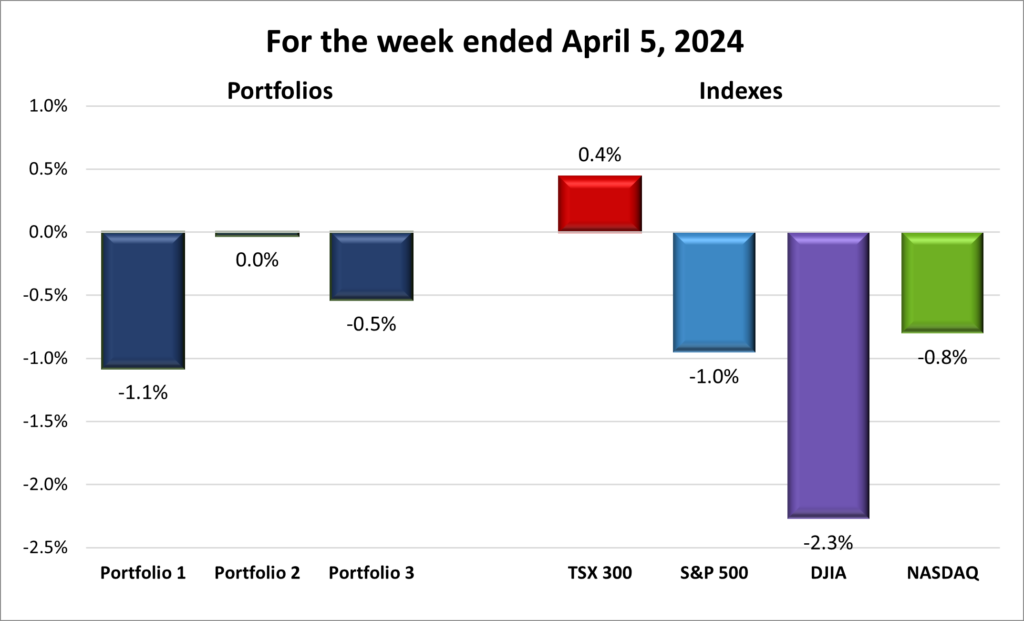
For the week, the TSX (SPTSX) rose 0.4%, the S&P 500 (SPX) dropped 1.0%, the DJIA (INDU) fell 2.3% and the Nasdaq (CCMP) declined 0.8%.

 
Index Weekly Streak
TSX: 8 – week winning streak
S&P: 1 – week losing streak
DJIA: 1 – week losing streak
Nasdaq: 2 – week losing streak

Bearish market Bull market. A good week for the North American stock markets.

Last week I suggested that, given the first quarter’s strongest start in five years, April could be primed for a bull run. However, the month began ominously, although this past week did end on a positive note with all four indexes ending higher on Friday.

Driving the markets this week were concerns that March’s robust economic indicators might dampen the prospects for US rate cuts. Following unexpectedly strong US jobs data, investors are now bracing for the Fed to delay interest rate reductions, with predictions now leaning towards two cuts this year, down from the three initially forecasted.

Complicating matters, a Fed official suggested that rate cuts might not be needed this year unless inflation’s decline accelerates, especially if the economy and labour market remain strong. However, another official expressed the view that once more concrete signs of declining inflation appeared, the Fed would be able to lower the interest rate. Of course, all the market heard was no rate cuts in 2024 and sent the markets plunging lower.

In Canada, the TSX was lifted by higher commodity prices and the latest labour report that showed employment had unexpectedly dropped. This has investors feeling the BoC will be compelled to lower the Canadian interest rate to prevent recession.

The energy sector, however, provided a silver lining to a dismal week, marking its second consecutive week of gains. Year to date, the Canadian energy sector has surged over 15%, while its American counterpart has exceeded 14% — both outperforming the TSX’s nearly 7% increase and the S&P’s 9.1%. The disparities between the Canadian and American energy sectors reflect variations in their respective subsector weightings, oil grades, and company performances within each energy sector.

Being an optimist, I believe the five-month rally is merely taking a well-deserved break. Despite a mixed week, I anticipate a return to the upward trajectory for all four indexes in the coming week. 😊

Next week the latest US inflation data from the Consumer Price Index (CPI) comes in. Let us hope the data shows inflation continues to fall.

Portfolio Weekly Streak
Portfolio 1: 2 – week losing streak
Portfolio 2: 1 – week losing streak
Portfolio 3: 3 – week losing streak

Bearish market To paraphrase Marvin the Martian, it was not a good week, not a good week at all. As you can see in the chart below, all three portfolios posted weekly losses. Portfolio 2 was essentially flat for the week but when I went out another decimal, the portfolio was down slightly so its winning streak came to an end after one week. ☹

Portfolio 1 had its second week of weekly losses after a run of twelve weeks of weekly gains. This past week saw many of the compaines in the portfolio post a weekly loss, including Nvidia (NASD: NVDA) which had a second straight weekly loss afer a run of 11 weekly gains. None of this week’s losses were significant (more than 10%), but they all added up causing the portfolio to suffer the biggest weekly decline. The lone bright spot was Cameco (TSE: CCO) up 10% for the week.

Many of the holdings in Portfolio 2 were down slightly, however, the American technology companies were flat or up slightly, and the two oil producers – Canadian Natural Resources Ltd (TSE: CNQ) and Crew Energy Inc (TSE: CR) – were both higher at the end of the week, offsetting the other losses.

Portfolio 3 had a bad week with almost two thirds of the companies recording a weekly loss. Fortunatley, Alvopetro Energy (TSXV: ALV) posted a 25% gain to limit the damage.

It hasn’t been too often in the last few months that all three portfolios suffered weekly losses. Hopefully all three get out of the red and back into the green next week. 😊

Weekly Portfolio & Index performance
Weekly Portfolio & Index performance for the week ended April 5, 2024.

Companies on the Radar

Stocks on my Radar No new companies came across my radar this past week. My radar list currently sits at a manageable five companies, listed below.

  • Celestica Inc. (TSE: CLS), a medium sized Canadian company that manufactures electronic products and provides supply chain services to companies around the world.
  • Carnival Cruise Line (NYSE: CCL), a large American company that operates several major global cruise lines.
  • Equitable Bank (TSE: EQB), a mid sized Canadian bank, considered Canada’s 7th bank, that provides financial services to consumers and businesses.
  • Lumine Group (TSE: LMN), a young Canadian mid sized company that acquires communications and media software companies and then strengthens and grows those companies.
  • Evolution AB (OTCM: EVVTY), a Swedish company that provides live casino solutions for global gaming operators.

Please keep in mind that these are only companies that have piqued my interest. This is not a recommendation or financial advice. You should do your own research or contact a professional before making any investment decisions.

The Radar Check was last updated April 5, 2024.

Stock on the Radar List. 1 of 2.
Stock on the Radar List. 2 of 2.

NOTE: Morningstar and Thomson-Reuters analysis is unavailable for Evolution from my usual sources because the company’s home stock exchange is the Nasdaq Stockholm in Sweden. While it is possible to invest in Evolution through the Over the Counter Market, I do not have access to analysis similar to the data available for companies traded on the major North American stock exchanges (Toronto Stock Exchange, New York Stock Exchange, and Nasdaq Stock market). The Analysts Rating and Price Target for Evolution are from Yahoo! Finance, under the Analysis tab once you have searched for the ticker.


Portfolio Update

Portfolio 1

Portfolio 1 for the week ended April 5, 2024: DOWN Red Down Arrow

  • As part of a lawsuit settlement, Alphabet’s (NASD: GOOGL) Google has agreed to destroy data that tracked users across Google’s Chrome browser when it was in Incognito mode (private browsing). As part of the settlement, the company will also allow users the ability to disable third party cookies while in Incognito mode, and Google will update the disclosures about what data they collect in that mode.
    In other Google news, the company is considering acquiring HubSpot (NYSE: HUBS), the maker of cloud based customer relationship management software.
  • Nuvei (TSE: NVEI) announced they were being taken private by private company Advent International. The purchase is an all-cash deal and is expected to close at the end of 2024 or early 2025.
  • Amazon (NASD: AMZN) announced they are removing their ‘Just Walk Out’ technology from their Amazon Fesh stores. ‘Just Walk Out’ utilizes an app on a smartphone that automatically charges the customers once they exit an Amazon Fesh store. Amazon will switch to Dash Carts that allow customers to scan items while shopping, calculate the weight of produce, and when they exit the store, the payment is processed using the credit card associated with their Amazon account and the receipt is emailed to the customer. Very slick!
    In other Amazon news, the company will allow Amazon Web Services (AWS) cloud credits to be used to cover costs in using AWS AI platform, known as Bedrock. The move is an attempt to hook startup companies to AWS as their cloud and AI platform of choice.
    AWS has laid off a few hundred employees in the sales, marketing, and tech departments as AWS attempts to streamline the organization
  • General Motors (NYSE: GM) reported their US sales dropped 1.5% in the first quarter due in part to lower deliveries to commercial customers. GM blamed the lower deliveries on availability issues of their vans and mid size trucks.
  • Lightspeed Commerce (TSE: LSPD) will let go approximately 280 employees as the company re-organizes and cuts costs in an attempt to become profitable.

Activity

No significant activity to report this week.

Dividends

Dividends Received this week for the following companies:

Companies followed by DRIP (Dividend Re-Investment Plan) indicate additional shares were purchased with the dividend. Any cash leftover was added to the cash balance.

Canadian $

Nuvei Corp (TSE: NVEI)

Telus Corp (TSE: T)

US $

No US$ dividends this past week.

Quarterly Reports

Nano-X Imaging Ltd.

Fourth quarter 2023 financial results on April 1, 2024

Portfolio 2

Portfolio 2 for the week ended April 5, 2024: FLAT Blue tilde, signifying break even or flat for the period.

  • Alimentation Couche-Tard Inc (TSE: ATD) won the 2024 Gallup Exceptional Workplace Award for the third straight year. The award is presented to companies that engage and develop their employees, leading to the most engaged work culture.
  • The Walt Disney Company (NYSE: DIS) won its battle for complete control of the Board of Directors when shareholders elected all twelve of Disney’s choices for the board. Activist investor Trian Partners had been trying to secure two of the seats on the Board after they grew frustrated with Disney’s share price performance over the last few years and with how Disney handled the succession of current Chief Executive (CEO) Officer Bob Iger.
    With the battle for the Board out of the way, Disney now turns its attention to finding a replacement for CEO Iger, who will retire by the end of 2026.

Activity

No significant activity to report this week.

Dividends

Dividends Received this week for the following companies:

Companies followed by DRIP (Dividend Re-Investment Plan) indicate additional shares were purchased with the dividend. Any cash leftover was added to the cash balance.

Canadian $

Canadian Natural Resources Ltd (TSE: CNQ)

Brookfield Renewable Partners LP (TSE: BEP.UN)

Supremex Inc. (TSE: SXP)

US $

No US$ dividends this past week.

Quarterly Reports

Dollarama Inc.

Fourth quarter 2023 financial results on April 4, 2024

Portfolio 3

Portfolio 3 for the week ended April 5, 2024: DOWN Red Down Arrow

  • To head off possible antitrust issues, Microsoft (NASD: MSFT) announced they will sell their Teams application separately from their Office product.
  • Experts suggest global lithium revenues will surpass US$ 9 billion this year and the global lithium market will continue to expand beyond 2030. This is good news for Lithium Americas (TSE: LAC) who own the Thacker Pass Mine in Nevada, considered to be the largest source of lithium in the US. Rising demand is also good news for sister company Lithium Americas (Argentina) (TSE: LAAC).
  • Alvopetro Energy (TSXV: ALV) reported that after redetermining their working interest in the Cabure unit, their allotment increased from 49.1% to 56.2%, effective June 1, 2024. This provided them with a 25.4% increase in proven or probable natural gas reserves, from 3.7 million barrels of oil equivalent (Mboe) to 4.6 Mboe. Starting June 1, the company will be entitled to 13.9 million cubic feet per day of natural gas production, compared to an average of 11.7 in 2023. Additional gas volumes is good news for us shareholders.
  • Cloudflare (NYSE: NET) announced they have purchased cloud-based observability platform company Baselime. This acquired technology allows developers to identify bugs in their product releases, roll back releases and optimize performance.
  • The Royal Bank (TSE: RY) fired their Chief Financial Officer Nadine Ahn after the bank discovered she had an undisclosed relationship with a colleague. After an investigation, it was found the colleague received preferential treatment, including promotion and wage increases. That employee was also let go.

Activity

No significant activity to report this week.

Dividends

Dividends Received this week for the following companies:

Companies followed by DRIP (Dividend Re-Investment Plan) indicate additional shares were purchased with the dividend. Any cash leftover was added to the cash balance.

Canadian $

Brookfield Renewable Partners LP (TSE: BEP.UN)

US $

No US$ dividends this past week.

Quarterly Reports

No quarterly reports this past week.
Weekly Update for the week ending March 29, 2024

As we headed into March, buoyed by a strong rally, I held high expectations. Known historically as a favorable month for North American stock markets, and with a wealth of positive economic indicators on the horizon, it seemed the stage was set for significant market advancements. Analysts in both Canada and the USA were looking for data indicating robust economies, stable job markets, and decreasing inflation rates going into the month.

Indeed, the March reports did not disappoint. They painted a picture of strong economies and steady job markets across North America, alongside growing investor optimism and diminishing inflation. These developments have heightened investors’ expectations for interest rate cuts by the central banks of Canada and the US come June. Furthermore, with April historically being a strong month for the markets (though it is important to remember that past performance does not guarantee future results), the stage seems perfectly set for a bullish April.

Let us hope the bulls take the lead and run with it. 😊

However, before we get ahead of ourselves, let’s see what happened this past week….

Items that may only interest or educate me ….

Canadian Economic news, US Economic news, How to invest in the stock market, ….


Canadian Economic news

This past week’s key economic data that the Bank of Canada (BoC) considers when deciding whether to raise or lower the interest rate.

Gross Domestic product (GDP)

According to Statistics Canada, the Canadian economy started 2024 strong, exceeding expectations with 0.6% GDP growth in January. This comes after a flat December report. Analysts had predicted a 0.4% expansion. Impressively, 18 out of 20 industry sectors grew in January, highlighting the broad-based strength of the economy.

On a monthly basis, the goods producing industries were up 0.2%, led by a 3.2% gain in the ‘Utilities’ industry. The services producing industries were up 0.7%, led by a 6.0% increase in ‘Educational services.’ Annually, the goods producing industries were down 1.1%. An annual increase of 0.5% in the ‘Mining, quarrying, and oil and gas extraction’ industry was more than offset by a 3.5% decline in the ‘Construction’ industry. The services producing industries were up 1.6%, led by a 3.6% increase in the ‘Transportation and warehousing’ and a 30.5% decrease in the ‘Management of companies and enterprises.’

The advance estimate for February suggests GDP rose 0.4% thanks to increased output from the resources sector.

Canadian market volatility

Over the past week, Canada’s Volatility Index (VIXC), which tracks the TSX 60 VIX, continued to drift lower, ending the week at 10.72, down from 10.92 the previous week. Falling inflation, expectations of lower interest rates in Canada and the US are likely the primary reasons for the low volatility figure.

The VIXC, often referred to as Canada’s ‘fear gauge,’ provides insights into the expected volatility within the Canadian stock markets. Typically, readings above 20 signify high volatility, while those below 20 indicate low levels. The current reading of 10.72 places it well below the high volatility zone.

US Economic news

This past week’s key data points that the Federal Reserve (Fed) considers when deciding whether to raise or lower the interest rate.

Personal Consumption Expenditures (PCE)

The Commerce Department reported that February’s PCE price index rose 0.3%, down slightly from a 0.4% gain in January. On a year over year basis, the PCE index gained 2.5% annually, up slightly from 2.4% in January. Analysts had expected a monthly gain of 0.4% and a yearly gain of 2.5%.

Core PCE, which excludes the volatile energy and food components, rose 0.3% on a monthly basis, down from 0.5% in January. Annually, core PCE fell to 2.8% from 2.9% in January. Analysts had expected a monthly gain of 0.5% and an annual gain of 2.8%.

While both overall PCE, or headline PCE, and core PCE continue to rise month over month, their pace of growth is slowing. Headline PCE was up marginally on an annual basis, but in line with expectations. Core PCE, the Fed’s preferred measure of inflation, fell on an annual basis.

Overall, this seems like a good inflation report and should be enough to keep a June rate cut on the table. Fed Chair Jerome Powell sounded pleased and indicated the data was inline with what they were hoping for. While inflation remains above their 2% target, it is slowly falling to their 2% rate.

Goss Domestic product (GDP)

The Bureau of Economic Analysis’s final estimate for the fourth quarter GDP showed that the economy expanded at an annual rate of 3.4%, a decrease from the 4.9% growth recorded in the third quarter. Despite the deceleration, fourth quarter performance exceeded analysts’ expectations, which had forecasted a growth rate of 3.2%.

This slowdown came despite stronger consumer spending, higher government expenditure at all levels, and a rise in exports. Weaker private inventory investment and reduced federal government spending appear to be the primary contributors to the deceleration.

Overall, the report indicates a solid economic performance in the fourth quarter, despite the slowdown from the third quarter’s growth pace.

American market volatility

The CBOE Volatility Index (VIX), widely regarded as the market’s fear gauge, showed little change this week, closing marginally lower at 13.03 compared to last week’s 13.06. With the VIX standing well beneath the 20 mark — a threshold typically indicative of heightened market volatility — it signals that investor anxiety is relatively subdued. This calm is attributed largely to the ongoing decrease in inflation and the anticipation of reduced interest rates later in the year.

Consumer Confidence Index (CCI)

The Conference Board announced that the CCI for March stands at 104.7, essentially holding steady from February’s slightly downwardly revised figure of 104.8. This outcome fell short of analysts’ expectations, which had predicted a rise to 107. Looking closer, the CCI comprises two key components: the Present Situation Index, reflecting consumers’ assessment of current conditions, which rose from 147.6 to 151.0, and the Expectations Index, indicating short-term outlooks, which declined from 76.3 to 73.8.

This suggests a growing confidence among consumers regarding their immediate circumstances, contrasted with a more cautious outlook for the near future. The dip in expectations may be attributed to concerns over an economic slowdown and a tighter labour market. Interestingly, an Expectations Index falling below 80 has historically been a precursor to a recession within the following year. Let us hope that is not the case this time.

The CCI serves as a vital gauge for economic sentiment, influencing both the Fed’s policy decisions and market movements. Its components offer insights into the public’s perception of economic health, with the Present Situation Index highlighting current economic robustness and the Expectations Index serving as a forward-looking indicator. The divergence observed in March’s figures emphasizes the complexity of current economic dynamics, wherein immediate conditions appear stable, yet prospects are viewed with concern.

Consumer Sentiment Index (CSI)

The University of Michigan’s final Consumer Sentiment Index (CSI) for March registered at 79.4, an increase of over 3% from February’s reading of 76.5, and a significant jump of over 28% compared to March 2023. This positive shift in consumer sentiment is largely attributed to several key economic factors. Firstly, inflation continues its downward trend, offering relief to consumers. Secondly, there is a widespread expectation among consumers that interest rates may decrease later in the year, potentially easing credit conditions. Lastly, the economy and job market have remained stable. The combination of these factors most likely combined led to the more optimistic outlook among consumers about their financial prospects and the general economic situation.

How can I invest in the stock market?

Investing in the stock market can seem daunting at first, however, investing in the stock market is a powerful way to grow your wealth over time. While it may seem intimidating initially, understanding the different paths you can take simplifies the process. Let us explore the avenues for investing in companies: buying shares directly or opting for pooled investment vehicles like mutual funds, index funds, and Exchange-Traded Funds (ETFs).

Direct Stock Purchases: For those who prefer to dive deep into market waters, buying shares of individual companies offers the chance for substantial gains. This route requires a hands-on approach, with diligence in research and monitoring your investments closely.

The Case for Pooled Investments:

  • Mutual Funds: Your investment is merged with others to acquire a diverse portfolio. Managed by professionals, these funds aim for lower volatility with the trade-off of higher annual fees known as the Management Expense Ratio (MER).
  • ETFs: Offering the diversity of mutual funds but with the flexibility of stocks, ETFs are passively managed, meaning lower fees. They mirror the performance of indexes or sectors and are traded like stocks.
  • Index Funds: These funds replicate the performance of a specific index (like the S&P 500). They are a hands-off, low-fee investment option that moves with the market.

Understanding fees is crucial. The MER represents the total cost of operating a fund as a percentage of its assets. Lower fees are often associated with passively managed funds, such as most ETFs and index funds, because they aim to mirror an index rather than outperform it. This means lower operational costs and, typically, a more straightforward investment strategy. When you purchase shares in a specific company directly you may have to pay a transaction fee, but many trading platforms do not charge for buying or selling shares. If there is a transaction fee, it is a one-time fee, usually less than $10.

The best time to start investing is when you are young, in your early 20s. This will maximize the amount of time you have to let your money work for you. Otherwise, the best time to start investing is now. Do not let the initial investment amount deter you. Many platforms offer options for starting small, whether through low-fee ETFs or no-minimum investment accounts.

Whatever you choose to invest in, your choice should align with your investment goals, risk tolerance, and how actively you want to manage your investments. Consulting a financial advisor can provide personalized advice tailored to your financial situation and objectives.

Investing is a journey of continuous learning. Explore books, online courses, and other resources to broaden your understanding. The more informed you are, the better investment decisions you will make.

Remember, investing is personal. Begin with clear objectives, stay within your comfort zone, and be prepared to adapt as you gain experience and knowledge.


Weekly Market Review

Monday: the start of a short final week of the quarter got off to a slow start as investors seem to be taking a breather after what has been a strong first quarter and last week’s mini rally. The price of oil rose on supply concerns after Ukraine and Russia attacked each other’s oil infrastructure.

In Canada, despite higher commodities prices, a last-minute plunge sent the Toronto Stock Exchange Composite Index (TSX) into red. In trading, Energy and Consumer Staples were the only Canadian sectors to end higher, while Healthcare and Industrials had the biggest drops.

In the US, the S&P 500 Index (S&P) and the Dow Jones Industrial Average (DJIA) were in the red all day, while the Nasdaq Composite Index (Nasdaq) was briefly in the green during the afternoon before dropping into the red at the end of the session. In trading, Energy and Utilities had the biggest gains of the American sectors, while Technology and Industrials had the biggest declines.

Tuesday: the indexes got off to a fast start but abruptly fell into the red at the end of the day as investors continued to take profits. Analysts and investors are waiting for the Fed’s favourite measure of inflation, the PCE, to come out at the end of the week. If the PCE comes in higher than expected it could push back the start of rate cuts in the US. Oil prices fell despite the loss of Russian oil inventories.

In Canada, the TSX ran its losing streak to three days as lower energy (oil and natural gas) prices weighed on the Canadian market. In trading, Healthcare, Consumer Cyclicals and Technology were the only sectors to end higher, while Energy and Utilities suffered the biggest declines.

In the USA, the three indexes continued their retreat from last week’s record highs as investors await Friday’s crucial inflation data. In trading, Healthcare, Consumer Staples, and Consumer Cyclicals were the only sectors to post a gain, with Utilities and Energy falling the most.

Wednesday: its not often this happens, but the indexes ended higher without the assistance of the big technology companies. The price of oil rebounded despite a build up in US oil stockpiles.

In Canada, the TSX set a record high as commodity prices continued to climb, fueling the resource heavy index. It was a good day in trading, led by the Healthcare and Basic Materials (miners and fertilizer manufacturers) sectors. Technology was the only sector to end the day lower.

In the US, the S&P set a record high as it snapped a three-day losing streak. In trading, it was a broad-based rally that saw all sectors end higher, led by Utilities and Basic Materials, with Technology and Energy trailing the pack.

Thursday: the last day of a short week ended with mixed results as only the Nasdaq failed to end the day higher. Oil prices rose on tighter supply concerns. Not only was this the last trading day of a shortened week, but it was the last trading session of March and the first quarter. It would have been fitting if a strong quarter had ended with all four indexes in the green. 😊

In Canada, the economy grew more than expected, combined with rising commodity prices to lift the TSX to a record closing high to close out the week, month, and first quarter. In trading, Basic Materials and Energy posted the largest gains, while Technology and Healthcare suffered the biggest losses.

In the USA, the latest GDP report showed the American economy expanded more than expected. In the markets, the S&P set another record high while the DJIA inched closer to breaking the 40,000 mark for the first time. In trading, it was another day of multi sector gains, led by Energy and Utilities. Technology was the only sector to lose ground.


Weekly Market and Portfolio Review

For the week, the TSX (SPTSX) rose 0.8%, the S&P 500 (SPX) increased 0.4%, the DJIA (INDU) gained 0.8% and the Nasdaq (CCMP) fell 0.3%.

 
Index Weekly Streak
TSX: 7 – week winning streak
S&P: 2 – week winning streak
DJIA: 2 – week winning streak
Nasdaq: 1 – week losing streak

Bull market. A good week for the North American stock markets. Bearish marketThe momentum from the previous week’s news of the Fed’s rate cut plans struggled in the early days of this past week, as depicted in the accompanying chart above. Nevertheless, bolstered by positive GDP data that surpassed expectations and investor optimism in anticipation of the PCE inflation report on Friday (when the markets were clsed for the Easter holiday), three of the four major North American indexes managed to close the week in positive territroy.

In the US, the tech sector saw a pause as investment shifted into sectors with perceived more growth potential, including Basic Materials, Energy, and Financials. In Canada, rising commodity prices lifted the TSX, bringing it level with the DJIA for the best weekly performance. This year’s rally, though more subdued compared to previous surges, is noticeable for its breadth across multiple industries, signaling a healthier market environment.

Looking forward to a full trading week ahead, I’m hopeful that the news of slowing inflation from the latest PCE report— the Fed’s preferred inflation gauge—will kickstart a rally, potentially driving all four indexes into positive territory next week.

Portfolio Weekly Streak
Portfolio 1: 1 – week losing streak
Portfolio 2: 2 – week winning streak
Portfolio 3: 2 – week losing streak

Bearish market Despite a decent week for the broader market indexes, my portfolios did not fare as well, as seen in the chart below.

Portfolio 1’s 12 week winning streak came to a crashing end this week, largely due to slight declines in many of its key holdings. However, a highlight was Nuvei Corp (TSE: NVEI), which surged 10% during the week. During my review of the portfolio, I noticed Nvidia’s (NASD: NVDA) had become the largest position within the portfolio, now constituting 40% due to its significant share price appreciation over the last 18 months. Despite Nvidia’s strong performance, its outsized presence makes the portfolio highly sensitive to its price fluctuations, prompting me to reconsider this position.

Portfolio 2 stood out as the week’s success story, marking its second consecutive weekly gain. Notably, it outperformed the four main indexes in percentage terms, driven by impressive gains in Hammond Power Solutions (TSE: HPS.A) up 22%, Guardant Health (NASD: GH) up 17%, and Mitek Systems (NASD: MITK) up 12%.

Portfolio 3, much like Portfolio 1, saw no significant movements but was predominantly characterized by minor decreases across most holdings. The combined weight of Shopify (TSE: SHOP), Microsoft (NASD: MSFT), and Royal Bank (TSE: RY)—which together comprise nearly half of the portfolio’s value— make it tough for the rest of the portfolio to overcome.

Hopefully next week I will see the return of all three portfolios into positive territory, and the start of a bull run in April. 😊

Weekly Portfolio & Index performance
Weekly Portfolio & Index performance for the week ended March 29, 2024.

Monthly Market and Portfolio Review

For the month, the TSX (SPTSX) surged 3.8%, the S&P 500 (SPX) advanced 3.1%, the DJIA (INDU) rose 2.1% and the Nasdaq (CCMP) gained 1.8%.

Bull market. A good week for the North American stock markets. With the strong rally leading into March, expectations were high. Traditionally a favorable month for the North American stock markets, the backdrop of robust economic indicators—solid GDP growth in Canada and the US, a steady job market, and cooling inflation—seemed poised to fuel significant market gains. Furthermore, with the Fed signaling three potential rate cuts within the year, investor confidence in managing inflation without triggering a recession was on the rise. This brew of positive news helped push consumer sentiment to its highest since 2021, fostering an environment ripe for market advances.

Each of the indexes recorded their fifth consecutive month of gains. While all three American indexes achieved record closing highs during the month, the rally broadened as investors rotated into other sectors creating a broader, more sustainable rally in the long run. However, the broadening came at the expense of the technology heavy Nasdaq, which trailed the other indexes in March.

In Canada, the TSX not only reached its highest point in two years but also extended its winning streak to twelve weeks before breaking that streak this week. A significant contributor to this performance was the Energy sector, propelled by rising prices, tightening supplies, and decreasing oil inventories. With OPEC+ potentially maintaining production cuts and ongoing geopolitical tensions impacting Russia’s energy infrastructure, the outlook for the TSX appears optimistic.

While the month’s advances didn’t meet my lofty expectations, March 2024 still marked a period of solid growth for the North American markets, underscoring the unpredictable nature of investing. 😊

Bull market. A good week for the North American stock markets. Bearish marketMarch presented a mixed bag across my three investment portfolios, as shown in the chart below. Portfolio 1 benefited from the initial surge in technology stocks, but these same stocks detracted slightly from its performance by month’s end. Portfolio 2 experienced significant volatility, eventually reducing its monthly loss thanks to strong gains from Hammond Power Solutions. Finally, Portfolio 3 recorded a modest increase, driven by a positive month for Lithium Americas (TSE: LAC).

Overall, it was a decent month for the portfolios. However, with the positive economic news – solid growth and cooling inflation in both Canada and the USA – I was admittedly hoping for stronger performance. This illustrates how market performance can be influenced by a wide variety of factors and why I diversify my portfolio with a focus on long term growth. It also confirms my inability to predict the market. 😊 With earnings season on the horizon and the potential for continued economic growth, April presents a new chapter for the markets.

Monthly Portfolio & Index performance
Monthly Portfolio & Index performance for March, 2024.

Companies on the Radar

Stocks on my Radar Carnival Cruise Line (NYSE: CCL) sailed onto my radar this past week. I had not previously considered investing in cruise lines, but recent analysis suggests these companies are undervalued, with CCL positioned as a leading opportunity. The cruise industry was hit hard by the COVID-19 pandemic, but there has been a gradual increase in sales, albeit not yet to pre-pandemic levels. Reports of strong sales for the upcoming travel season hint at a demand rebound.

CCL, a prominent American cruise line company, which includes Carnival Cruise Lines, Holland America, and Princess Cruises among its brands. It is experiencing rising sales and improving cash flow, despite reporting net losses in recent years. However, these losses are diminishing. While I do not consider CCL a good fit for me long term, its current momentum presents a potentially profitable short-term opportunity. I plan to do further due diligence to assess whether the potential rewards justify the risks involved.

Carnival Cruise Line now joins the four companies currently on my radar list:

  • Celestica Inc. (TSE: CLS), a medium sized Canadian company that manufactures electronic products and provides supply chain services to companies around the world.
  • Equitable Bank (TSE: EQB), a mid sized Canadian bank, considered Canada’s 7th bank, that provides financial services to consumers and businesses.
  • Lumine Group (TSE: LMN), a young Canadian mid sized company that acquires communications and media software companies and then strengthens and grows those companies.
  • Evolution AB (OTCM: EVVTY), a Swedish company that provides live casino solutions for global gaming operators.

Please keep in mind that these are only companies that have piqued my interest. This is not a recommendation or financial advice. You should do your own research or contact a professional before making any investment decisions.

The Radar Check was last updated March 29, 2024.

Stock on the Radar List. 1 of 2.
Stock on the Radar List. 2 of 2.

NOTE: Morningstar and Thomson-Reuters analysis is unavailable for Evolution from my usual sources because the company’s home stock exchange is the Nasdaq Stockholm in Sweden. While it is possible to invest in Evolution through the Over the Counter Market, there is no analysis similar to the data available for companies traded on the major North American stock exchanges (Toronto Stock Exchange, New York Stock Exchange, and Nasdaq Stock market). The Analysts Rating and Price Target for Evolution are from Yahoo! Finance, under the Analysis tab once you have searched for the ticker.


Portfolio Update

Portfolio 1

Portfolio 1 for the week ended March 29, 2024: DOWN Red Down Arrow

  • Lightspeed Commerce (TSE: LSPD) is considering returning to private ownership. No formal review or discussions have begun.
  • Amazon (NASD: AMZN) was fined US$ 7.8 million by Poland’s consumer regulator UOKiK for misleading Polish customers about product availability and delivery dates.
    In other Amazon news, the company plans to spend US$ 150 billion building out their data centres and cloud computing capabilities over the next 15 years.
  • Visa (NYSE: V) and Mastercard (NYSE: MA) reached a settlement with US based merchants to cap the swipe fees they charge merchants. The deal limits swipe fees to 0.04% through 2030, and merchant groups can negotiate directly with the two credit card companies like large companies do, and small merchants will be able to set different swipe fees for all cards, not just by card network. All this is good news for merchants, but will the savings be passed along to us consumers. Doubtful. ☹
  • Home Depot (NYSE: HD) announced they had made their largest ever acquisition when they bought building materials supplier SRS Distribution for US $18.25 billion. The deal is expected to boost their professional customer base.

Activity

Received interest on TD 1-year cashable GIC.

Dividends

Dividends Received this week for the following companies:

Companies followed by DRIP (Dividend Re-Investment Plan) indicate additional shares were purchased with the dividend. Any cash leftover was added to the cash balance.

Canadian $

Canadian National Railway Company (TSE: CNR)

US $

NVIDIA Corp (NASD: NVDA)

Quarterly Reports

Boston Omaha Corporation

Fourth quarter 2023 financial results on March 27, 2024

Portfolio 2

Portfolio 2 for the week ended March 29, 2024: UP Green Up Arrow, signifying a positive week

  • Walt Disney (NYSE: DIS) reached an agreement with the state of Florida over the governance of the Disney World special tax district. This settlement allows Disney to proceed with its expansion plans for its Disney World parks and resorts.

Activity

No significant activity to report this week.

Dividends

Dividends Received this week for the following companies:

Companies followed by DRIP (Dividend Re-Investment Plan) indicate additional shares were purchased with the dividend. Any cash leftover was added to the cash balance.

No dividends this past week.

Canadian $

Hammond Power Solutions

Brookfield Infrastructure Partners LP (TSE: BIP.UN)

Brookfield Infrastructure Corp (TSE: BIPC)

US $

No US$ dividends this past week.

Quarterly Reports

No quarterly reports this past week.
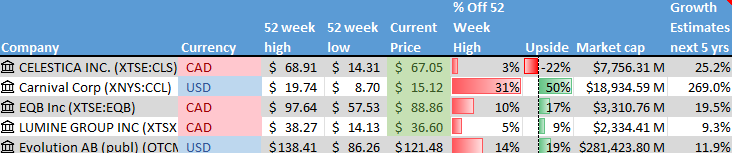
Portfolio 3

Portfolio 3 for the week ended March 29, 2024: DOWN Red Down Arrow

  • Nothing to report about the companies in this portfolio this past week

Activity

No significant activity to report this week.

Dividends

Dividends Received this week for the following companies:

Companies followed by DRIP (Dividend Re-Investment Plan) indicate additional shares were purchased with the dividend. Any cash leftover was added to the cash balance.

Canadian $

Brookfield Reinsurance Ltd (TSE: BNRE)

Brookfield Renewable Corp (TSE: BEPC)

US $

No US$ dividends this past week.

Quarterly Reports

No quarterly reports this past week.

 

Weekly Update for the week ending March 22, 2024

A friend of mine, let us call him the Stock Swami, jokingly (I think) asked me if it would be safer to keep your money under your mattress to avoid losing money during stock market crashes. This is a question I hear a lot from new investors, and it is a valid concern. There is a fear of losing money during market downturns.

Ultimately, the best place for your money depends on your individual circumstances and financial goals. If you need easy access to your money and want low risk, a savings account might be a good choice. For long-term goals and the potential for higher returns, you might consider stocks or other investments.

This week I compare the returns of a mattress and other places to park your money and get it working for you. But first, there was some good economic news, and Apple is getting ready to join the artificial intelligence field, but not as you might expect. So, without further ado, let’s look back at what else happened this past week….

Items that may only interest or educate me ….

Canadian Economic news, US Economic news, Apple joins the AI race, The stock market versus your mattress, ….


Canadian Economic news

This past week’s key economic data that the Bank of Canada (BoC) considers when deciding whether to raise or lower the interest rate.

BoC meeting minutes

During their meeting on March 6th, the Bank of Canada (BoC) governors gathered to discuss Canada’s monetary policy and to determine the need for any adjustments to the benchmark interest rate.

During this meeting, the six-member council acknowledged a global economic slowdown, with the US as an exception thanks to its robust economy and labour market. Core inflation was easing in both the US and the European Union (EU), despite slight increases in oil prices. Consumer sentiment has improved thanks to a sustained rally in equities markets in Canada and the US.

Despite a rise in January’s GDP, economic growth in Canada remains below its potential, particularly a stagnant latter half of 2023. The labour market is weakening, with job growth unable to keep pace with population increases. Wage growth is slowing down. The Consumer Price Index (CPI) has dipped due to decreasing prices of goods, while the prices of services remain unchanged. Persistent high shelter costs are still applying upward pressure on inflation.

BoC officials noted that the higher interest rate is gradually balancing supply and demand as expected. However, they were concerned that inflation may be proving stubborn and losing its downward momentum. As well, the higher interest rates posed a risk of dampening economic growth and increasing unemployment, although recent GDP data has somewhat alleviated those fears. The members agreed they would need to tread carefully when balancing the risks of delaying rate cuts—potentially weakening economic conditions unnecessarily—against the risks of premature rate cuts that could undermine the progress made in their battle to lower inflation.

The decision was to maintain the current interest rate at 5.0%, and let it continue bringing down inflation. The governors concurred that they would need to see further evidence of a continued decline in inflation, especially core inflation, before considering a reduction in Canada’s benchmark rate.

Consumer Price Index (CPI)

Statistics Canada’s latest CPI report shows a welcome deceleration in the annual inflation rate, settling at 2.8% in February, down from January’s 2.9%. This is better than analysts’ forecasts of a 3.1% increase. On a month-to-month basis, inflation saw a modest uptick of 0.3% in February. Again, better than analysts’ predictions of a 0.6% increase.

While headline inflation, or the cost of all items, saw the biggest annual gains in shelter costs (rents and mortgages) up 6.5%, these were offset by significant declines in telephone and internet access services, down 20.5% and 13.2%, respectively. Travel tours saw the biggest monthly increase at 12.3% due mainly to higher fuel prices. Internet access services also led the monthly decline, dropping 9.4%. Notably, food price increases continue to slow, with grocery prices rising less than inflation for the first time since October 2021.

The core CPI, which excludes the volatile elements of gas and food prices, also showed signs of easing, slowing to 2.8% from January’s 3.1%, marking the lowest rate in two years. Month-over-month core inflation edged up slightly to 0.2% after being flat in January.

The BoC had indicated a desire for core inflation to continue to fall towards their 2% target. This latest report shows both headline and core figures within their 1% – 3% range and trending downward. With inflation showing signs of cooling, this report potentially opens the door for the central bank to lower the benchmark rate in June, if not sooner, which could lead to lower borrowing rates. This latest inflation report is good news for consumers, businesses, and the BoC.

Canadian market volatility

Over the past week, Canada’s Volatility Index (VIXC), which tracks the TSX 60 VIX, fell to 10.92 from the previous week’s figure of 11.67, reflecting a 6% decrease in expected volatility. This could be due to lower inflation figures, potentially paving the way for the BoC to consider interest rate cuts, as well as the US Federal Reserve reiterating their intention to reduce rates three times this year.

The VIXC, often referred to as Canada’s ‘fear gauge,’ provides insights into the expected volatility within the Canadian stock markets. Typically, readings above 20 signify high volatility, while those below 20 indicate low levels. The current reading of 10.92 places it well within the low volatility zone, underscoring a period of relative market stability.

Retail Sales

According to Statistics Canada, January retail sales decreased by 0.3%, following a 0.9% increase in December. This contraction, which was slightly less severe than the anticipated 0.4% decline, marked the most significant drop since March 2023. The decrease was primarily attributed to a 3.0% reduction in new car sales. However, when excluding gas stations, fuel vendors, and motor vehicle and parts dealers, core retail sales actually rose by 0.4% in January. Additionally, an advance estimate from Statistics Canada for February indicates a modest increase in retail sales of 0.1%.

This latest report suggests that consumer spending has begun to stall, likely influenced by the higher interest rates currently impacting the economy. This stagnation, combined with this week’s lower than expected inflation data helps build the case for the BoC to lower the benchmark interest rate in the next few months.

US Economic news

This past week’s key data points that the Federal Reserve (Fed) considers when deciding whether to raise or lower the interest rate.

Federal Open Market Committee (FOMC)

In a closely watched decision, the Fed held the US benchmark interest rate steady at 5.5% following its two-day meeting. In his post-meeting press conference, Fed Chair Jerome Powell acknowledged the recent inflation readings were higher than expected. Yet, he reassured that inflation is progressing, albeit on “a somewhat bumpy road,” towards their 2% target.

Looking ahead, despite an uncertain economic outlook, Fed members project the interest rate to fall to 4.6% by year-end, followed by further declines to 3.9% in 2025 and 3.1% in 2026. As always, they emphasized their readiness to adjust rates in response to changes in the economic environment.

The decision to hold rates steady was widely expected. Investors particularly welcomed the Fed’s reiteration of three rate cuts in 2024, suggesting a total decline of 0.75%. This optimism came after recent concerns that higher-than-expected inflation figures might lead the central bank to dial back its rate cut forecasts. While no timeline for the rate cuts was announced, today’s message from the FOMC was well-received by the market.

American market volatility

The CBOE Volatility Index (VIX), often referred to as the market’s fear gauge, has seen a steady decline over the week, closing at 13.06. This represents a 9% drop from the previous week’s figure of 14.41. Currently sitting well below the 20 level, which is commonly associated with high market volatility, the VIX’s latest reading suggests that investor anxiety is comparatively low. This calm in the markets is likely influenced by the Federal Reserve’s renewed expectations to cut interest rates three times within the year.

Apple joins the AI race

In an effort to bolster their artifical intelligence (AI) integration efforts, Apple (NASD: AAPL) has turned to outside sources to jumpstart their efforts. Apple has been in discussions with Google (NASD: GOOGL) about integrating Google’s Gemini AI into the iPhone. They have also been exploring options with OpenAI to potentially use their AI technology, which is the same one that underpins Microsoft’s AI endeavors.

For Google, this could be a significant win. Having their AI on the two most popular smartphones would be quite the achievement. And for OpenAI, working with Apple could further establish their presence in the tech world, pairing them with not just Microsoft but also Apple, two of the titans of the industry. It is interesting to note, Microsoft has a 49% stake in OpenAI, so if Apple decides to go this route, Microsoft will indirectly benefit as well.

This type of partnership would not be without its challenges. Anti trust regulators in the US, the European Union, and to a lesser extent, anti trust regulators in other countries would be concerned about potential dominance in the emerging AI space. Past dealings, like Google paying Apple to make their search engine the default on iPhones, have already drawn scrutiny from regulators. Any new arrangements, especially one involving Google, would likely attract a similar level of attention. And a potential Apple/OpenAI collaboration might also be closely watched, given Microsoft’s (NASD: MSFT) significant investment in OpenAI.

As these discussions are in the early stages, there is still a long road ahead before any concrete decisions are made. It will be interesting to see how these potential partnerships unfold, shaping the future of AI in consumer technology.

The stock market versus your mattress?

Most mattresses pay 0% interest and are not a very secure way to stash your money. In the event of a robbery or fire the cash could literally go up in smoke and you’ll be left with nothing. Besides a lack of security, a mattress provides no return at all. 😊

While financial institutions (banks, credit unions, etc.) are significantly more secure than a mattress, they currently provide less than 1% interest on standard savings accounts. While they are safer, your money essentially sits idle, losing purchasing power due to inflation. Most financial institutions provide an investment product called a GIC (Guaranteed Investment Certificate) that pays 1 – 4%, depending on the length of term. During the term you may not have access to your money without incurring a withdrawal penalty which could leave you with less than you started.

The other option is to invest in the stock markets which offer the potential for higher returns that outpace inflation. Historically, the stock market has averaged approximately an 8% average annual growth rate. However, unlike the previous options, the stock market fluctuates, and you could experience losses. With that in mind, you can invest in the market in a few ways including mutual funds, index funds, Electronic Traded Funds or by purchasing shares of individual companies directly. The table and chart below illustrate the potential growth of $1,000.00 put into a mattress at 0%, a typical savings account at 1.0%, a GIC at 2% and in the stock market with the average 8% return.

Potential growth of various savings methods

My initial forays into the stock market involved mutual funds. I later transitioned to buying shares of individual companies through a stockbroker and then an online brokerage account. While I do keep some cash in a savings account, I avoid keeping any money under a mattress. 😊

What about Bonds?

While Canada Savings Bonds are no longer available, bonds remain a popular investment option with several types offering different characteristics and risk profiles.

Bonds essentially represent loans you make to a government or corporation. In return, the issuer promises to pay you regular interest and repay the principal amount at maturity. Compared to stocks, bonds generally offer lower potential returns but also lower volatility, making them a good choice for income generation and diversification.

Different types of bonds exist:

  • Government bonds: Considered safer due to government backing.
  • Corporate bonds: Issued by companies and vary in risk based on the company’s creditworthiness.
  • Municipal bonds: Issued by local governments and may offer tax benefits depending on location.

My experience with bonds is limited, but I encourage you to learn more if they align with your investment goals. If you want to learn more about bonds, check out Beginners’ Guide to Investing in Bonds from Wealthsimple, the Securities and Exchange Commission, or check with your financial institution. If you decide to purchase a bond, make sure to speak a reputable financial advisor who can provide you with personalized guidance to meet your needs.

Remember, investing involves risk, including the potential for loss of principal. Past performance is not necessarily indicative of future results. If you are interested in learning more about investing, consult a financial advisor or explore reputable online resources. You can even follow me on my investment journey through my weekly “Weekly Updates” and commentaries. 😊


Weekly Market Review

Monday: investors seem to have gotten over last week’s inflation reports, sending the three major American indexes – the S&P 500 Index (S&P), the Dow Jones Industrial Average (DJIA), and the Nasdaq Composite Index (Nasdaq) – higher for the day. Investors now turn their focus to the Fed’s March meeting. It is almost a given the rate will remain unchanged, but investors are waiting for the Fed’s economic projections to see if they still anticipate fewer rate cuts, and when they expect to start lowering the rate. Oil prices rose on lower Middle East exports and signs of growing demand from the world’s two biggest economies – USA and China.

In Canada, the Toronto Stock Exchange Composite Index (TSX) ended lower as investors await the latest inflation data which is expected to be higher than in January. Rising inflation is not good news for companies hoping the BoC will lower the interest rate sooner rather than later. The BoC wants to see consistent signs of inflation falling before it considers lowering the rate. In trading, Healthcare, Industrials and Energy were the only Canadian sectors to end in the green, while Telecommunications Services and Basic Materials (miners and fertilizer manufacturers) dropped the most.

In the US, technology stocks benefitted from buzz around AI created by NVidia’s (NASD: NVDA) annual conference where the company outlined their roadmap for the upcoming year. The surge in big technology companies helped the S&P and the Nasdaq snap 3-day losing skids. In trading, Technology and Consumer Cyclicals had the biggest advances, while Healthcare and Basic Materials were the only American sectors to decline.

Tuesday: the markets got off to a slow start in the morning but rebounded in the afternoon to lift all four indexes into the green as investors await tomorrow’s rate decision from the Fed. The price of oil rose after Ukraine forces attacked Russian refineries leading to possible supply issues.

In Canada, The TSX rose on higher oil prices. On the economic front, the February CPI numbers came in lower than expected, boosting investors expectations of an interest rate cut in the next few months. In trading, Consumer Cyclicals and Energy led the Canadian sectors, while Basic Materials and Utilities suffered the biggest drops.

In the US, the S&P set another new closing high record. It was a day of broad-based gains in the American markets, led by the Energy and Industrials sectors. Telecommunications Services was the only sector to finish lower.

Wednesday: the markets were flat in morning trading awaiting the Fed’s interest rate announcement. Following the announcement the markets surged sending all indexes into the green by the end of the day. The Fed announced they were maintaining the US interest rate at 5.5% and they expected to lower the rate three times in 2024. Oil prices dropped on fears of lower demand.

In Canada, the TSX rose on the news from the Fed, following their American counterparts into positive territory. Lower inflation numbers in Canada has investors thinking the BoC will lower rates in Canada as well. In trading, it was a day of broad-based gains in the Canadian sectors, led by the Technology and Basic Materials sectors. Consumer Staples and Energy were the only two sectors to end lower.

In the USA, investors’ reaction to the good news led to a broad rally that saw all three indexes close at record highs, with the S&P breaking the 5,200 mark for the first time. It was another day of sector wide gains, this time led by Basic Materials and Consumer Cyclicals. Healthcare was the only American sector to decline.

Thursday: the markets continued Wednesday’s rally, fueled by investors feeling the Fed simply delayed rate cuts rather than reduced the number of cuts. Oil prices continue to drift lower as demand continues to falter.

In Canada, the TSX reached a record high close as investors expect the BoC and the Fed to lower interest rates three times this year. In trading, Healthcare and Industrials were the biggest gainers in the Canadian sectors, while Technology, and Telecommunications Services posted the biggest drops.

In the US, lifted by investor optimism of future rate cuts in 2024, all three indexes set record highs for the second straight day. The S&P set a closing record for the 20th time this year, and the DJIA set another as it approached the 40,000 mark. In trading, Financials, and Industrials advanced the most, with Telecommunications Services and Utilities declining the most.

Friday: it was a mixed day in the markets, with only the Nasdaq able to end in positive territory. Oil prices have continued to drop on demand concerns after topping the US$ 80 mark earlier in the week.

In Canada, the TSX ended the day slightly lower as investors took some profits. However, it was not enough to prevent the index from notching a sixth straight weekly win, its longest winning streak since December 2020. In trading, Healthcare, Consumer Staples, and Industrials were the only Canadian sectors to advance, with Telecommunications Services and Consumer Cyclicals suffering the biggest declines.

In the US, the Nasdaq set a new closing high buoyed by investor optimism of rate cuts later this year. Meanwhile, the DJIA and S&P slipped back as investors likely took profits after both posted record highs yesterday. In trading, the Technology and Utilities sectors were the only American sectors to end in the green, while Financials and Telecommunications Services dropped the furthest into the red.


Weekly Market and Portfolio Review

For the week, the TSX (SPTSX) gained 0.6%, the S&P 500 (SPX) rose 2.3%, the DJIA (INDU) advanced 2.0% and the Nasdaq (CCMP) surged 2.9%.

 
Index Weekly Streak
TSX: 6-week winning streak
S&P: 1-week winning streak
DJIA: 1-week winning streak
Nasdaq: 1-week winning streak

Bull market. A good week for the North American stock markets. This past week saw a strong performance across North American markets, with each of the four major indexes not only ending the week in positive territory, as illustrated in the accompanying chart. They also set new all-time highs along the way – a testament to the ongoing bullish sentiment.

Fueling this rally was the eagerly awaited conclusion of the Fed’s FOMC meeting. Fed Chair Jerome Powell’s confirmation of projections for three interest rate cuts by year’s end came as a relief to investors, who had been concerned about potential reductions in anticipated cuts. This announcement has set the stage for a June meeting rate cut, sparking optimism among analysts and investors alike.

This rally was characterized by its overall breadth, marking a departure from last year’s rally where the market gains were predominantly driven by the ‘Magnificent 7’ companies. This shift towards a more inclusive market rally indicates a healthier sentiment, where growth is more evenly distributed across various sectors, enhancing market stability.

Somewhat overlooked, the TSX achieved an all-time high this week, boasting a nearly 7% increase since mid-February—a performance that outshines its American counterparts for the same period. Key contributors to this climb included Canadian Natural Resources (TSE: CNQ) and Shopify (TSE: SHOP), while TD Bank (TSE: TD) and BCE (TSE: BCE), among others, acted as a drag on the index.

I hope this bullish sentiment continues well into the future. 😊

Portfolio Weekly Streak
Portfolio 1: 12-week winning streak
Portfolio 2: 1-week winning streak
Portfolio 3: 1-week winning streak

Bull market. A good week for the North American stock markets. As shown in the chart below, this week brought encouraging gains across all my investment portfolios. Portfolio 1 outperformed all other portfolios and indexes, without any significant winners or losers. Notably, stocks like Nvidia, with its US$ 34.47 increase, demonstrate how minor percentage gains in high-value stocks can significantly influence overall portfolio performance.

Portfolio 2 finally saw a win, albeit the smallest among the three. Its standout was Hammond Power Supply (TSE: HPS.A), which surged 10%. This portfolio’s focus on dividend-paying rather than growth stocks likely tempered its gains relative to the others.

Reviewing Portfolio 3, I noticed a general uptrend in company values, yet no standout winners. I wondered what was preventing the portfolio from posting a similar percentage gain to Portfolio 1 when I came across Alvopetro Energy (TSXV: ALV). The share price had fallen 28% during the week, explaining the difference in performance.

With the Fed’s confirmed expectation to cut US interest rates three times this year, investor optimism is high. I’m hopeful that this positive momentum is just the beginning of a winning streak for all three portfolios. 😊

Weekly Portfolio & Index performance
Weekly Portfolio & Index performance for the week ended March 22, 2024.

Companies on the Radar

Stocks on my Radar While no new companies caught my eye this past week for inclusion on my investment radar, I’ve decided to remove Palantir Technologies (NYSE: PLTR) from my watchlist. My mixed feelings about their facial recognition technology played a big part in this decision. Recognizing both the potential benefits and the ethical concerns it presents, I found myself grappling with a key investor question: “Would I be proud to own a part of this company?” Since I could not answer with a firm ‘yes,’ and considering the many other investment opportunities out there, I have opted to move on.

For now, the radar list consists of these four companies:

  • Celestica Inc. (TSE: CLS), a medium sized Canadian company that manufactures electronic products and provides supply chain services to companies around the world.
  • Equitable Bank (TSE: EQB), a mid sized Canadian bank, considered Canada’s 7th bank, that provides financial services to consumers and businesses.
  • Lumine Group (TSE: LMN), a young Canadian mid sized company that acquires communications and media software companies and then strengthens and grows those companies.
  • Evolution AB (OTCM: EVVTY), a Swedish company that provides live casino solutions for global gaming operators.

Please keep in mind that these are only companies that have piqued my interest. This is not a recommendation or financial advice. You should do your own research or contact a professional before making any investment decisions.

The Radar Check was last updated March 22, 2024.

Stock on the Radar List. 1 of 2.
Stock on the Radar List. 2 of 2.

NOTE: Morningstar and Thomson-Reuters analysis is unavailable for Evolution from my usual sources because the company’s home stock exchange is the Nasdaq Stockholm in Sweden. While it is possible to invest in Evolution through the Over The Counter Market, there is no analysis similar to the data available for companies traded on the major North American stock exchanges (Toronto Stock Exchange, New York Stock Exchange, and Nasdaq Stock market). The Analysts Rating and Price Target for Evolution are from Yahoo! Finance, under the Analysis tab once you have searched for the ticker.


Portfolio Update

Portfolio 1

Portfolio 1 for the week ended March 22, 2024: UP Green Up Arrow, signifying a positive week

  • Nvidia held their annual GTC developer conference this past week where they unveiled their latest chips and software updates. The company expects to start shipping their new B100 Blackwell chips later this year.
  • Alphabet’s Google received a € 250 million euros from France’s competition watchdog for using content from French publishers and news agencies without telling them. As part of the settlement, Google will not contest the facts.
  • The US Department of Justice are suing Apple, claiming the company monopolized the smartphone market, driving up prices for consumers. The DOJ says Apple violated anti trust laws by stopping competitors from accessing the features found on iPhones. In the European Union (EU), regulators are investigating Apple to ensure that the company complies with the EU’s Digital Markets Act.

Activity

Sold: Cargojet Inc. (TSE: CJT) I initially invested in Cargojet in 2018, recognizing air freight as an expanding sector. The investment proved exceptionally fruitful during the Covid-19 pandemic, as the surge in e-commerce demand led to an increased need for Cargojet’s overnight shipping services across Canada. This drove the company’s share price to an all-time high in November 2020. However, since reaching that peak, the share price has declined by over 50%, a trend clearly depicted in the five-year chart below. This downtrend prompted me to reconsider my position. The recent market rally presented an opportune moment to exit with a decent profit, a decision I am pleased with given the circumstances. 😊

Sold: Tesla, Inc. (NASD: TSLA) In January 2021, I invested in Tesla, recognizing its leading position in the electric vehicle (EV) market, its expanding customer base, and its diversification into energy solutions. Despite reservations about Elon Musk’s public statements and actions, his pioneering role in the EV industry was undeniable.

However, my investment thesis has changed. My initial optimism has been dampened by several factors: Tesla’s sales momentum is slowing; the broader EV market is experiencing a slowdown in sales growth; and Mr. Musk’s assertion that Chinese EV manufacturers “will pretty much demolish most other companies in the world” has added a layer of uncertainty. Additionally, Mr. Musk’s extensive involvement in his other ventures has led me to question his focus on Tesla’s day-to-day operations.

By selling my shares in Tesla, even at a loss, allows me to invest that money elsewhere in companies I feel will do better in the long run.

Sold: kneat.com Inc. (TSE: KSI) I made several investments in kneat.com across all three portfolios, starting in May 2019, with three additional investments from December 2019 through January 2020, as the price rose to C$3.00 a share. Since then, however, the share price has bounced around the C$ 3.00 level. This lack of movement led to a waning interest in the company. To confirm I was not missing any critical information, I reviewed the financial statements and noticed that, despite increased sales, net income, earnings per share, and free cash flow were all declining. Additionally, the company’s long-term debt had increased over the past year. It appeared the company had not capitalized on its increased sales effectively.

Given my reduced interest and the company’s disappointing financial performance, I viewed the recent rally as an opportune time to divest all my stakes in the company. Fortunately, I was able to make a decent profit in all three portfolios. 😊

Dividends

Dividends Received this week for the following companies:

Companies followed by DRIP (Dividend Re-Investment Plan) indicate additional shares were purchased with the dividend. Any cash leftover was added to the cash balance.

Canadian $

Decisive Dividend Corp (TSE: DE)

US $

Home Depot Inc. (NYSE: HD)

Quarterly Reports

Decisive Dividend Corporation

Fourth quarter 2023 financial results on March 20, 2024

Portfolio 2

Portfolio 2 for the week ended March 22, 2024: UP Green Up Arrow, signifying a positive week

  • Alimentation Couche-Tard (TSE: ATD) announced they have signed a deal with Davids Tea Inc (TSXV: DTEA) that will make David’s Tea the exclusive supplier of a premium sachet format tea to ATD’s Circle K and Couche-Tard convenience stores.
    In other Alimentation news, former Canadian Prime Minister Stephen Harper has been appointed by the Board of Directors as a new Board member.
  • The Bank of Nova Scotia’s (TSE: BNS) Wealth management division received six Euromoney Private Banking Awards 2024, including Canada’s Best Private Bank for Sustainability and awards for five other countries in Latin America and the Caribbean.

Activity

Sold: kneat.com Inc. See explanation under Portfolio 1.

Dividends

Dividends Received this week for the following companies:

Companies followed by DRIP (Dividend Re-Investment Plan) indicate additional shares were purchased with the dividend. Any cash leftover was added to the cash balance.

Canadian $

Dream Industrial Real Estate Investment Trust (TSE: DIR.UN) DRIP

US $

No US$ dividends this past week.

Quarterly Reports

Mitek Systems, Inc.

Fourth quarter 2023 financial results on March 19, 2024

Alimentation Couche-Tard Inc.

Third quarter 2024 financial results on March 20, 2024

Portfolio 3

Portfolio 3 for the week ended March 22, 2024: UP Green Up Arrow, signifying a positive week

  • Microsoft announced they have appointed DeepMind co-founder Mustafa Suleyman as the head of their new consumer AI unit. They also hired several people from DeepMind.
  • Brookfield Asset management (TSE: BAM) announced that Brookfield’s Hadley Peer Marshall will succeed chief financial officer Bahir Manios, effective May 31. He was previously the co-head of Brookfield’s infrastructure debt and structured solutions. Prior to that he was an executive at Goldman Sachs.
  • The fourth quarter report for Alvopetro Energy was not a good one. Revenue was down 10%, fourth quarter profits dropped 87%. They also estimated lower production levels in the next quarter, leading to a 36% reduction in the quarterly dividend, from US$ 0.14 to US$ 0.09. Ouch!

Activity

Sold: kneat.com Inc. See explanation under Portfolio 1.

Dividends

Dividends Received this week for the following companies:

Companies followed by DRIP (Dividend Re-Investment Plan) indicate additional shares were purchased with the dividend. Any cash leftover was added to the cash balance.

No dividends this past week.

Quarterly Reports

Alvopetro Energy Ltd.

Fourth quarter 2023 financial results on March 19, 2024


Weekly Update for the week ending March 15, 2024

Inflation jitters sent US markets south, while the TSX extended its weekly winning streak. Let us take a look at what happened and how it impacted the three portfolios. Plus, we will shift gears and explore the hot topic of hybrid electric vehicles – are they a sound alternative to full on electric vehicles or just a pit stop on the road to full electrification? This week I will take look at their gaining popularity and investment potential in this week’s market update!

So, without further ado, let’s see what happened this past week….

Items that may only interest or educate me ….

Canadian Economic news, US Economic news, The rise of hybrids, ….


Canadian Economic news

This past week’s key economic data that the Bank of Canada (BoC) considers when deciding whether to raise or lower the interest rate.

Canadian market volatility

This past week, Canada’s volatility index (VIXC), represented by the TSX 60 VIX, remained relatively unchanged at 11.67, compared to 11.63 the prior week. The minimal change comes despite higher-than-expected inflation data from the US. This suggests that investor confidence in the Canadian markets remains strong, possibly due to the rising TSX. The VIXC, also known as Canada’s ‘fear gauge,’ measures volatility within the Canadian stock markets. Readings above 20 are generally viewed as ‘high’ and those below 20 as ‘low’. The current reading of 11.67 sits firmly within the low volatility zone.

US Economic news

This past week’s key data points that the Federal Reserve (Fed) considers when deciding whether to raise or lower the interest rate.

Consumer price Index (CPI)

Inflation remained steady in February with overall prices rising 0.4%, following a similar increase in January. Year-over-year, CPI rose 3.2%, exceeding analyst expectations of 3.1%. Higher gas prices (up 3.6%) were the main culprit, while restaurant prices saw the largest annual increase (up 4.5%).

Core CPI, which excludes the more volatile food and gas prices, rose 0.4%, following a similar increase in January. Annually, core cpi rose 3.8%. Both the monthly and annual numbers were higher than expected increases of 0.3% and 3.7%, respectively. The main cause of higher core inflation was shelter, which includes mortgages and rent, and transportation cost which rose due to higher fuel costs.

Fed officials have said they want to see more data showing inflation continues its downward trajectory to 2% before they lower the rate. With this latest data, there is no chance the Fed will lower the interest rate at their meeting next week. Analysts are now pointing to the June meeting as the earliest to expect rate cuts to begin.

American market volatility

The CBOE Volatility Index (VIX), also known as the fear gauge, dropped slightly by 0.2% this week, settling at 14.41 compared to 14.74 last week. While this suggests a cautiously optimistic market, the VIX fluctuated throughout the week between 15.97 and 13.46, highlighting its potential for quick swings. With a current reading of 14.41, the VIX sits comfortably below the 20 mark that typically indicates high volatility. This suggests that investor anxiety is currently relatively low.

Consumer Sentiment Index (CSI)

The University of Michigan’s preliminary mid-March reading of its CSI showed a slight decrease to 76.5, down from 76.9 at the end of February, contrary to analysts’ expectations for it to remain unchanged at 76.9. On a monthly comparison, the CSI experienced a minor decline of 0.5%, yet it has shown a substantial improvement of 23.4% compared to the same period last year. This recent update indicates that consumer sentiment is fairly stable, albeit with slightly tempered expectations due to a sense higher interest rates could remain longer than anticipated.

Retail Sales

The Commerce Department’s Census Bureau reported a modest 0.6% increase in retail sales In February, falling short of the anticipated 0.7% rise and coming after January’s revised decline of 1.1%. Year-over-year, sales grew by 1.5%, slightly below the expected 1.6%. These figures suggest a dip in consumer spending, largely attributed to the dampening effect of higher interest rates on expenditures.

Despite these lower-than-expected sales figures, the Fed is unlikely to shift towards lowering interest rates in the near term. This stance is due to recent reports on the CPI and Producer Price Index (PPI) showing inflation rates higher than anticipated, which overshadow concerns of reduced spending. The Fed remains focused on curbing inflation to meet its 2% target, prioritizing the control of price levels over stimulating an already strong economy.

The rise of hybrids

Why are many motorists turning to Hybrid Electric Vehicles (HEVs) as their vehicle of choice, especially amidst reports of slowing EV sales? The reasons are as varied as they are compelling, marking a significant shift in consumer preferences towards more sustainable and practical transportation solutions. This interest in hybrids, is reflective of a broader market dynamic where the appeal of proven hybrid technology is gaining ground, not just for its environmental benefits, but also for its practical advantages. At the heart of this shift towards an electrified future in the North American automotive industry, several key factors are driving the growing popularity of hybrids.

Originally this was to be a brief summary of HEV benefits but it became longer than anticipated, so I decided to give the topic its own post. To discover why drivers, keen on reducing their carbon footprint, are increasingly choosing HEVs over EVs as they move away from internal combustion engines, click here.


Weekly Market Review

Monday: the markets continued last week’s pullback before a late day surge nudged the value-oriented Toronto Stock Exchange Composite Index (TSX) and the Dow Jones Industrial Average (DJIA) into positive territory at the end of the day. Investors were cautious ahead of Tuesday’s US CPI inflation report that could provide clues to how soon the Fed could start cutting rates. Oil prices rose slightly as demand concerns in China were offset by supply concerns in the Middle East.

In Canada, the TSX benefited from higher oil prices and investors moving into more traditional, value-oriented companies. In trading, the Energy and Basic Materials (miners and fertilizer manufacturers) sectors posted the biggest gains, with Healthcare and Technology dropping the most.

In the US, the more growth oriented the S&P 500 Index (S&P), and the Nasdaq Composite Index (Nasdaq) ended the in negative territory as investors hedged their bets against the last inflation report before the Fed’s next meeting. In trading, Telecommunications Services and Consumer Staple saw the biggest gains, while Technology and Industrials posted the biggest losses.

Tuesday: all four indexes ended higher as investors did not seem bothered by the latest US inflation report that showed core inflation came in higher than anticipated. Despite the CPI numbers, investors still believe the Fed will lower the rates sometime in summer.

In Canada, the TSX closed at its highest point since April 2022. In trading, the Canadian Technology and Industrials sectors advanced the farthest, while losses were only suffered in Utilities, Telecommunications Services, and Basic Materials sectors.

In the US, the S&P set a record high close. In trading, the Technology and Consumer Cyclicals gained the most, while Utilities, Telecommunications Services and Basic materials were the only American sectors to drop.

Wednesday: a mixed day in the markets with the S&P and Nasdaq ending lower in the red, while the TSX and DJIA ended higher in the green. Investors are still digesting yesterday’s higher than expected core inflation data which could provide the Fed with a reason to maintain the current rate for longer. Oil prices edged upward on signs of higher demand from the US.

In Canada, the TSX extended its rally a third day thanks to higher oil and other commodity prices. In trading, the top sectors were Basic Materials and Technology, while the Telecommunications Services and Utilities were the only Canadian sectors to end in the red.

In the USA, investors seemed to be taking more money off the table after Wednesday’s rally in technology companies. In trading, Energy and Basic Materials had the biggest gains, while Technology, Healthcare and Consumer Cyclicals were the only American sectors to end lower.

Thursday: all four indexes ended lower after the US PPI showed wholesale inflation came in twice as high as expected. Another higher-than-expected inflation report has investors considering the Fed could wait longer than expected to lower the US interest rate. Oil prices rose on supply concerns and lower US inventories.

In Canada, the TSX got caught in the downdraft from the US, sending the TSX into the red and ending its three-day winning streak. In trading, Energy was the only Canadian sector to post a gain, otherwise all sectors ended lower with Telecommunications Services and Consumer Staples dropping the farthest.

In the US, higher inflation data from the CPI and PPI reports has investors concerned interest rates cold remain higher, for longer. In trading, the Energy sector was the only American sector to end higher. Financials and Telecommunications Services suffered the biggest losses.

Friday: sticky inflation reports weighed on the markets, with the TSX the only major North American index to make it into positive territory at the end of the day. The thought of interest rates remaining higher for longer whiles the Fed continues to try and drive inflation down to 2% has stalled the markets upward momentum. After a short rally this past week, oil prices fell on some profit taking.

In Canada, the TSX ended the day in the green. Rising commodity prices more than offset the drop in technology stocks. In trading on Bay Street, Healthcare and Basic Materials posted the largest gains, while Technology and Consumer Cyclicals suffered the biggest losses.

In the USA, a pullback in semiconductor stocks contributed to the drop in the American indexes, sending the Nasdaq to its first weekly back-to-back losses in five months. Higher-than-expected inflation numbers pushed up US Treasury yields, and now have investors contemplating the first-rate cut coming in July. In trading on Wall Street, Basic Materials and Industrials were the biggest winners, while Technology and Consumer Cyclicals posted the biggest losses.


Weekly Market and Portfolio Review

For the week, the TSX (SPTSX) gained 0.5%, the S&P 500 (SPX) fell 0.1%, the DJIA (INDU) slipped 0.02% and the Nasdaq (CCMP) dropped 0.7%.

Index Weekly Streak
TSX: 5-week winning streak
S&P: 2-week losing streak
DJIA: 3-week losing streak
Nasdaq: 2-week losing streak

Bearish market The TSX stretched its weekly winning streak to five, its longest in eleven months, standing out as the only major North American index to manage a gain this past week, as illustrated in the graph above.

In last week’s congressional testimony, Fed Chair Jerome Powell stressed the need for “just a bit more evidence” that inflation is moving towards the Fed’s 2% target before the central bank would consider cutting borrowing costs. The latest CPI data—showing inflation at 3.2% and core CPI rising to 3.8%— was not what investors’ were hoping for. Nevertheless, the market experienced a rally on Wednesday. It seems investors had anticipated these higher figures, judging them insufficient to derail a potential interest rate cut in June.

Investors had been hoping that recent economic, job, and inflation data wouldn’t significantly influence the Fed’s upcoming interest rate decisions. The anticipation is for rate cuts this summer, which could lower borrowing costs for consumers and businesses, potentially stimulating the markets.

However, Thursday brought more US inflation data that was higher than expected, causing investors to reconsider the timeline for the Fed to begin lowering interest rates. This resulted in all three major American indexes finishing the week in negative territory.

After a strong start to the year, market momentum has cooled. Since late October 2023, there has been a healthy bull run with the TSX up 16% and the S&P up 23%, the latter setting a record close 17 times in 2024. Yet, recent strong economic data and unexpectedly high inflation figures have prompted a reassessment of when the Fed might reduce interest rates. While a rate cut is anticipated, the timing has become more uncertain.

Investors are hoping next week’s Fed meeting will provide clues on the outlook for rate cuts, preferably for cuts in June. For now, the market rally has paused, but the anticipation is for the upward trend to resume in due course.

Portfolio Weekly Streak
Portfolio 1: 11-week winning streak
Portfolio 2: 5-week losing streak
Portfolio 3: 2-week losing streak

Bearish market This week presented a mixed bag for my three portfolios, consistent with the overall downtrend in the markets. Only one managed to climb into the green, while the other two faced setbacks.

Portfolio 1 stood out, extending its winning streak to an impressive 11 weeks, largely buoyed by gains in four out of the five ‘Magnificent 7‘ companies it holds (Alphabet (NASD: GOOGL), Amazon (NASD: AMZN), Apple (NASD: AAPL), Nvidia (NASD: NVDA) and Tesla (NASD: TSLA))—Tesla being the lone exception. On a side note, Tesla has found itself as the S&P’s worst performer in 2024, down 34% since the start of the year. Otherwise, most companies in the portfolio showed minimal movement, except for Rivian Automotive (NASD: RIVN), which took a notable 13% hit. On a positive note, Nvidia celebrated its tenth consecutive week of gains—its longest streak ever—surging over 80% this year.

Portfolio 2 had a tough week, despite stock price performance almost evenly split between gains and losses. While Microsoft (NASD: MSFT) hit a new all-time high, the positive impact was negated by a significant 10% drop in Guardant Health (NASD: GH), with MongoDB also contributing to the downturn after a $25 drop in share price during the week.

Portfolio 3 had a volatile week. It got off to a promising start, with a 0.7% increase by Thursday. However, Friday’s market downturn, wiped out the gains and left the portfolio in the red for the week. The standout performer was Lithium Americas (TSE: LAC), which soared 19%. Despite this, the majority of companies saw their share prices end the week lower, with a 10% decrease in Enghouse Systems (TSE: ENGH).

Looking forward, investors turn their attention to the upcoming Fed meeting with cautious optimism. Any indication of a favorable shift in interest rate policy could serve as a catalyst for renewed investor confidence and a resurgence in market momentum. Here is to hoping for a positive pivot that reignites the markets’ upward trajectory and our portfolios’ continued success. 😊

Weekly Portfolio & Index performance
Weekly Portfolio & Index performance for the week ended March 15, 2024.

Companies on the Radar

Stocks on my Radar This week, no new companies caught my attention, but I have managed to trim my radar list to a more manageable five companies. Walmart (NYSE: WMT) has been added to Portfolio 1. Meanwhile, I’ve decided to part ways with Ulta Beauty (NASD: ULTA), and Monolithic Power Systems (NASD: MPWR). Although both Ulta and Monolithic are commendable companies, I believe the companies that remain on the list provide better opportunities for achieving my investment objectives.

For now, the radar list consists of:

  • Celestica Inc. (TSE: CLS), a medium sized Canadian company that manufactures electronic products and provides supply chain services to companies around the world.
  • Equitable Bank (TSE: EQB), a mid sized Canadian bank, considered Canada’s 7th bank, that provides financial services to consumers and businesses.
  • Lumine Group (TSE: LMN), a young Canadian mid sized company that acquires communications and media software companies and then strengthens and grows those companies.
  • Palantir Technologies (NYSE: PLTR), an American company offering an AI-enabled software platform, primarily serving intelligence agencies for anti-terrorist efforts.
  • Evolution AB (OTCM: EVVTY), a Swedish company that provides live casino solutions for global gaming operators.

Please keep in mind that these are only companies that have piqued my interest. This is not a recommendation or financial advice. You should do your own research or contact a professional before making any investment decisions.

The Radar Check was last updated March 15, 2024.

Stock on the Radar List. 1 of 2.
Stock on the Radar List. 2 of 2.

NOTE: Morningstar and Thomson-Reuters analysis is unavailable for Evolution from my usual sources because the company’s home stock exchange is the Nasdaq Stockholm in Sweden. While it is possible to invest in Evolution through the Over The Counter Market, there is no analysis similar to the data available for companies traded on the major North American stock exchanges (Toronto Stock Exchange, New York Stock Exchange, and Nasdaq Stock market). The Analysts Rating and Price Target for Evolution are from Yahoo! Finance, under the Analysis tab once you have searched for the ticker.


Portfolio Update

Portfolio 1

Portfolio 1 for the week ended March 15, 2024: UP Green Up Arrow, signifying a positive week

  • Apple updated its App Store on iPhones in Europe that will allow third party developers to distribute their apps directly to consumers rather than through the App Store. The changes were made to comply with last week’s new European Union’s Digital Markets Act (DMA). To compensate for the lost revenue from the App Store, Apple has introduced a “core technology fee” of 50-euro cents per user account each year, even if developers opt not to use Apple’s App Store or payment system.
    In other Apple news, the company bought Canadian artificial intelligence (AI) startup private company DarwinAI, adding its employees to Apple’s AI unit.
    Apple settled a class action lawsuit for US$ 490 million that claimed Chief Executive Officer Tim Cook misled investors about falling iPhone sales in China. Apple denied the claim but settled to avoid costs and the distraction.
  • Tesla is in talks with a number of Southeast Asian countries about building another factory to handle demand from one of the fastest growing electric vehicles (EV) markets.
    In other Tesla news, production has resumed at their German gigafactory after being shut down for a few days due to an arson attack at a nearby electrical pylon that caused a power failure.
  • Nvidia has sped up the pace of releasing new chips into the market from a two-year cycle to a one-year cycle for its AI data centre line of products. Next week the company is expected to release the B100, also known as Blackwell, the follow up to its successful H100 AI chips.

Activity

Bought: Walmart Inc. Portfolio 1’s technology-centric focus brings inherent volatility. Adding Walmart provides some stability as it consistently performs well during economic downturns, driven by consumer demand for essential goods. This will help mitigate losses when the broader market is struggling, like it did in 2022.

Walmart stands out among Consumer Staples companies for its strong revenue and profit generation, supported by a diversified business model encompassing retail, wholesale, and e-commerce operations. The acquisition of Vizio is particularly interesting, enhancing Walmart’s e-commerce capabilities and digital advertising reach, while leveraging its existing infrastructure and customer base. Additionally, Walmart’s stable cash flow supports a regular dividend, contributing to its appeal.

Financially, Walmart has growing revenues, net income, free cash flow, and earnings per share, complemented by a decreasing share count – indicative of a financially healthy company. Its wide moat, characterized by a brand synonymous with affordability, vast buying power, efficient supply chains, and comprehensive product assortment, strengthens its competitive position.

While risks exist, such as competition from other retailers and e-commerce giants, potential operational disruptions from unforeseen events, and supply chain challenges, Walmart’s proven history of overcoming such hurdles reinforces my confidence in its resilience. Although the share price may be a bit overvalued, I view it as more than offset by the company’s future growth potential.

Ultimately, the addition of Walmart provides Portfolio 1 with diversification, income, and growth potential, aligning with my objective to balance out volatility with established, stable investments. This investment enhances the portfolio’s resilience and positions it for sustained growth.

Sold: Progyny (NASD: PGNY) I initially invested in this company back in December 2019, a time when my approach to selecting stocks was not as selective as it is today. Despite its impressive spike during the 2021 bull run, the stock has since receded and remained stagnant around the mid US$ 30 range for the past 18 months. Although the investment turned out reasonably well, I have decided to sell it as part of a broader strategy to streamline my portfolio. For better management and a clearer picture of the portfolio, I am cutting down on the number of companies in the portfolio to focus on fewer, high-quality companies.

Dividends

Dividends Received this week for the following companies:

Companies followed by DRIP (Dividend Re-Investment Plan) indicate additional shares were purchased with the dividend. Any cash leftover was added to the cash balance.

Canadian $

Pulse Seismic Inc (TSE: PSD)

Dream Industrial Real Estate Investment Trust (TSE: DIR.UN)

Yellow Pages Ltd (TSE: Y)

US $

General Motors Co (NYSE: GM)

Skyworks Solutions Inc (NASDAQ: SWKS)

BSR Real Estate Investment Trust (TSE: HOM.U)

Quarterly Reports

No quarterly reports this past week.

Portfolio 2

Portfolio 2 for the week ended March 15, 2024: DOWN Red Down Arrow

  • The European Union’s (EU) anti trust regulator, the European Commission (EC) has been ordered to take measures to protect personal data when it is transferred to non-EU countries. The EC was found to have breached privacy rules when it used Microsoft software and the data was transferred to Microsoft and other non-EU countries. The EC was also ordered to stop the transfer of data to countries outside the EU.
  • Microsoft told the EU anti trust regulators, the EC, that arch competitor Alphabet’s Google enjoys a competitive advantage because of all the data it has collected over the years from its search engine, and its use of customized AI chips.
  • TC Energy (TSE: TRP) announced they have sold their natural gas pipeline to Ksi Lisims LNG, a partnership between the Nisga’a first nations and American company Western LNG. The sale is part of TC Energy’s plan to sell assets to reduce corporate debt.

Activity

No significant activity to report this week.

Dividends

Dividends Received this week for the following companies:

Companies followed by DRIP (Dividend Re-Investment Plan) indicate additional shares were purchased with the dividend. Any cash leftover was added to the cash balance.

Canadian $

SmartCentres Real Estate Investment Trust (TSE: SRU.UN)

iA Financial Corporation Inc (TSE: IAG)

US $

Microsoft Corp (NASD: MSFT)

Quarterly Reports

No quarterly reports this past week.

Portfolio 3

Portfolio 3 for the week ended March 15, 2024: DOWN Red Down Arrow

  • Recently, Lithium Americas Argentina Corp. (TSE: LAAC).] and Lithium Americas Corp. were removed from the TSX by S&P Dow Jones Indices, the index manager. Its likely they were removed from the index as the fall in their respective share prices led to their market capitalizations following below the requirement to be included in the index. The S&P Dow Jones Indices periodically update the TSX, and other indexes, in order to remain relevant, and representative of the companies traded on the Toronto Stock Exchange as a whole to provide investors with accurate benchmarks.
    In other Lithium Americas news, the company was granted a conditional commitment loan of US$ 2.26 billion by the US Department of Energy. The money will go towards financing the construction of its Thacker Pass, Nevada project. The mine is expected to become the largest source of lithium in North America when it becomes operational in three years. General Motors (NYSE: GM) is the largest investor in LAC and will receive the majority of lithium produced at the mine.
  • Brookfield Corporation (TSE: BN) is in negotiations with Singapore Communications, Southeast Asia’s largest telco operator, to acquire a significant stake of their wholly owned Australian unit Optus.

Activity

No significant activity to report this week.

Dividends

Dividends Received this week for the following companies:

Companies followed by DRIP (Dividend Re-Investment Plan) indicate additional shares were purchased with the dividend. Any cash leftover was added to the cash balance.

Canadian $

SmartCentres Real Estate Investment Trust (TSE: SRU.UN)

US $

Microsoft Corp (NASD: MSFT)

Quarterly Reports

Enghouse Systems Limited

First quarter 2024 financial results on March 13, 2024


Hybrid Vehicles

Why are many motorists turning to HEVs as their vehicle of choice?

A graph from the NY Times showing the growth of a hybrid electric vehicles and electric vehicles.
This graph by Steve Milloy shows the growth of HEVs and EVs registrations in the US from 2014 to 2023

In an era where sustainability and green technology are at the forefront of global priorities, the automotive industry is undergoing a significant transformation. Electric vehicles (EVs) are often hailed as the future of transportation. However, hybrid electric vehicles (HEVs) have been on a roll and are increasingly capturing the attention of consumers and investors alike, as shown in the graph on the right. In the US, industry leaders Toyota (NYSE: TM), Honda (NYSE: HMC), and Hyundai (OTCM: HYMTF) are leading the charge, closely followed by Detroit’s giants. But what exactly makes HEVs the current favored choice over their fully electric counterparts?

Figure 1: This graph by Steve Milloy shows the growth of HEVs and EVs registrations in the US from 2014 to 2023.

At their core, HEVs blend the reliability of internal combustion engines (ICE) with the efficiency of electric motors. This hybrid approach allows for energy recovery through regenerative braking and while driving, enhancing fuel economy. Plug-in Hybrids (PHEVs), with larger batteries and the option to recharge from external sources, extend this principle further. For simplicity, our discussion includes both under the HEV umbrella.

Now, let us take a look at why many motorists are choosing HEVs as their ICE replacement. This dominance can be attributed to several key factors that make hybrids a more attractive option for many drivers today.

The biggest hurdle for EVs is their price tag. HEVs offer a significant cost advantage over EVs due to lower upfront prices and slightly higher, but often offset by fuel savings, maintenance costs. This price difference can be a dealbreaker for many budget-conscious consumers.

Hybrid technology has been around for decades, with pioneers like the Toyota Prius leading the way. This extended track record translates to established reliability. Mechanics are familiar with hybrid systems, and replacement parts are readily available. Conversely, EVs are a relatively new technology, with many mechanics unable to properly service EVs, leaving some consumers hesitant to embrace potential reliability issues that might arise with a less-proven system.

The limited availability of charging stations for EVs creates “range anxiety” for potential buyers. The fear of running out of power and being stranded far from a charger is a major deterrent. Hybrids, on the other hand, offer the best of both worlds. They can run on gasoline when the battery is depleted, eliminating the need to constantly search for charging stations and allowing for longer trips without worry.

For drivers accustomed to gasoline-powered vehicles, hybrids offer a familiar driving experience. They still have a traditional gas brake pedals that function the same as in ICE vehicles, and they do not require any special charging routines. This ease of transition can be a major selling point for those who are hesitant to adapt to a completely new way of driving.

It is important to note that while hybrids boast better fuel economy, their maintenance costs can be slightly higher than those of traditional ICE vehicles. This is because they have two powertrains to maintain – a gasoline engine and an electric motor. However, the fuel savings often outweigh these additional costs.

While not entirely emissions-free, hybrids are significantly cleaner than traditional gasoline vehicles. They offer a significant reduction in tailpipe emissions, particularly in city driving where regenerative braking can recapture energy lost during braking. This makes them a good option for environmentally conscious consumers who may not be ready to fully commit to an EV.

In summary, hybrids offer a compelling alternative to EVs, with advantages in affordability, established technology, and range anxiety. They provide a familiar driving experience and act as a stepping stone towards cleaner transportation. Automakers understand this appeal, and some may see HEVs as a gateway to future EV sales.

Are hybrids an investing opportunity?

While the transition to EVs is inevitable, HEVs offer a valuable stepping stone. This concept might have been helpful during my own past investment decisions, where I focused heavily on pure EV companies such as Tesla (NASD: TSLA) and Rivian (NASD: RIVN), as well as General Motors (NYSE: GM) with their Ultium battery system to power GM and other manufacturers’ vehicles.

For investors interested in the HEV market, a company’s track record in hybrid technology, their commitment to sustainable practices, and their future plans for electrification are all insightful factors to consider when making investment decisions. Established automakers with a proven track record and substantial resources might be equally well-positioned, if not better, to navigate the transition towards a greener future due to their experience and infrastructure.

For more information on the outlook for EVs, check out the International Energy Association’s latest Global EV Outlook.